




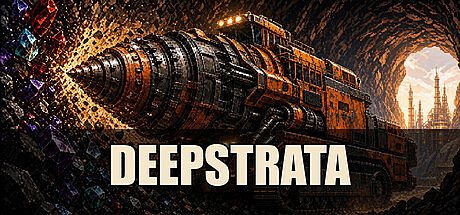





Deepstrata is an action, indie, and adventure game for PC centered on procedural drilling and resource extraction in a hostile underground environment. Players pilot a drilling pod through destructible rock layers, balancing fuel consumption, cargo weight, and emerging hazards while racing to return to the surface with valuable materials.
Gameplay
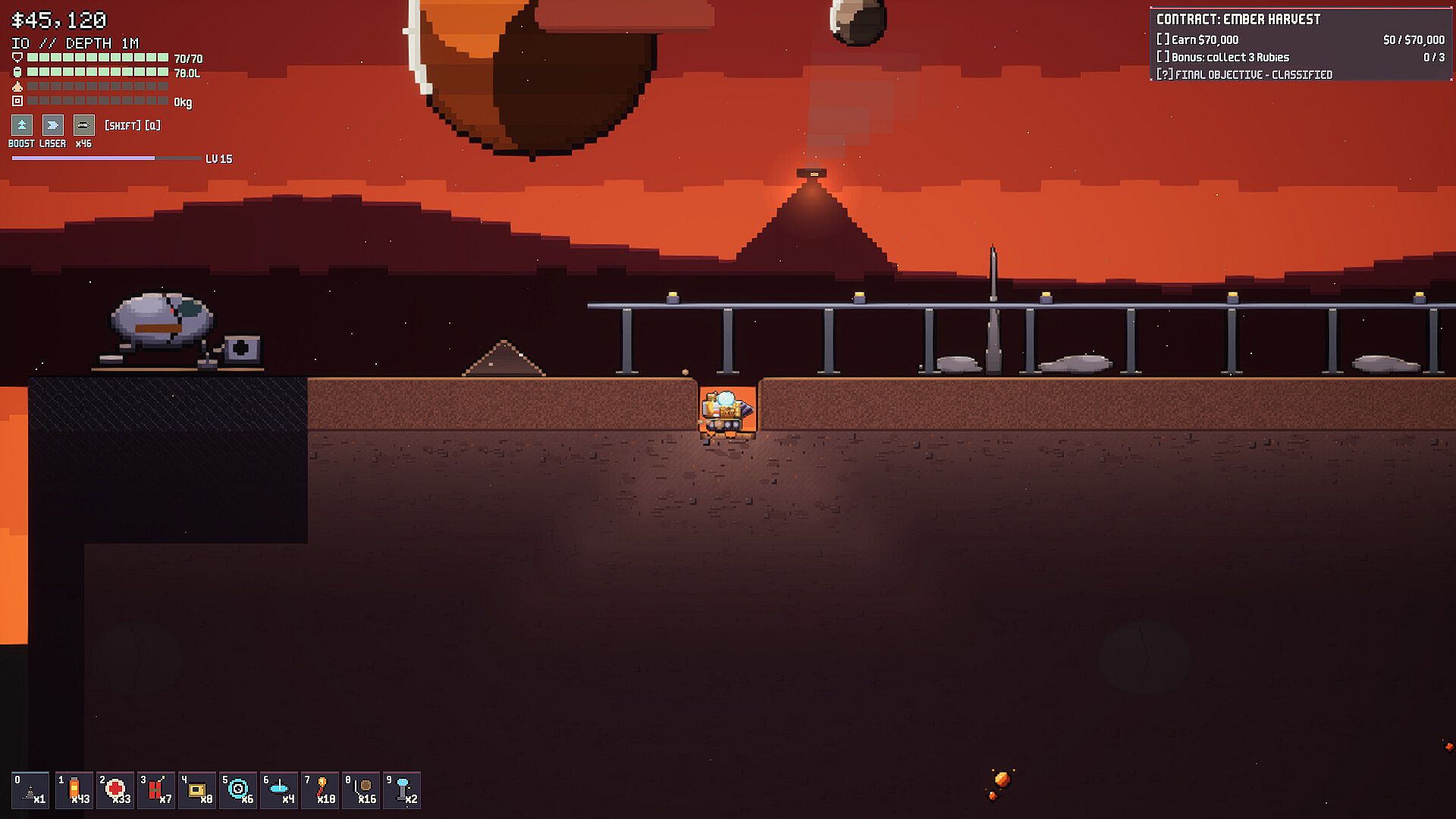
The core loop revolves around descending into layered geology, excavating ore and other finds, and managing limited resources on the way back up. Fuel burns continuously below the surface, while added cargo weight reduces thruster effectiveness and maneuverability. Rock is fully destructible cell by cell, allowing players to carve paths or undermine larger boulders that can fall and cause damage based on drop distance.
Hazards appear in varied forms. Gas pockets can ignite and chain-react with nearby pockets. Thermal cores, pressurized seams, and brittle shelves require careful handling to avoid cave-ins or sudden eruptions. Buried caches may yield extra fuel, hidden veins, or relics, but some conceal lava seeps that end a run quickly. Living Strata formations add another layer: each follows a specific rule such as relieving stress nodes, venting seams, or quenching cores. Successful clean work on these yields mastery bonuses on top of standard ore returns.
Equipment upgrades purchased with collected resources improve the drill, cargo capacity, fuel efficiency, and thruster power, enabling deeper and more profitable runs. The descent itself forms the primary challenge, with every meter below the surface line representing both opportunity and risk.
Game Modes
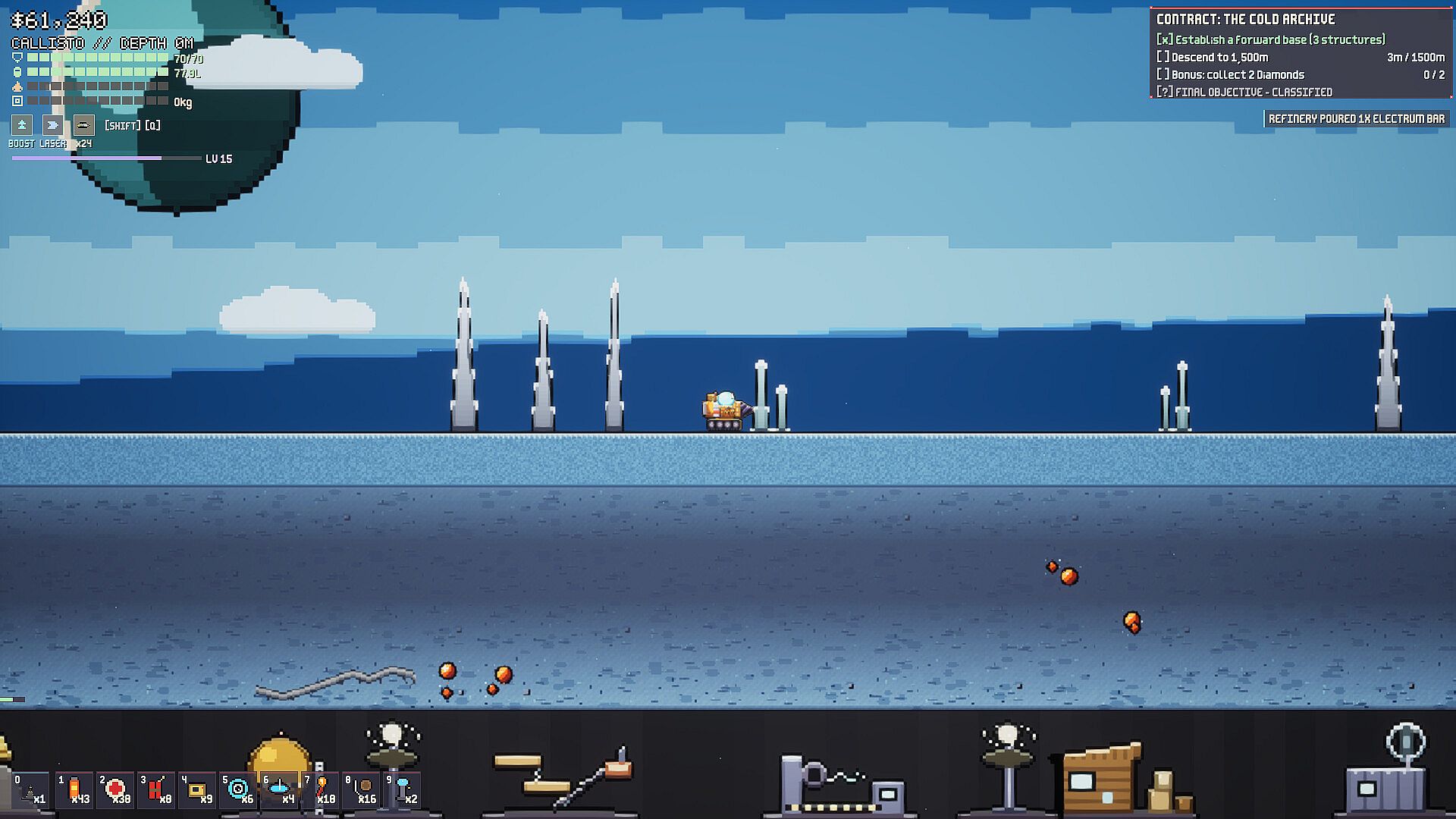
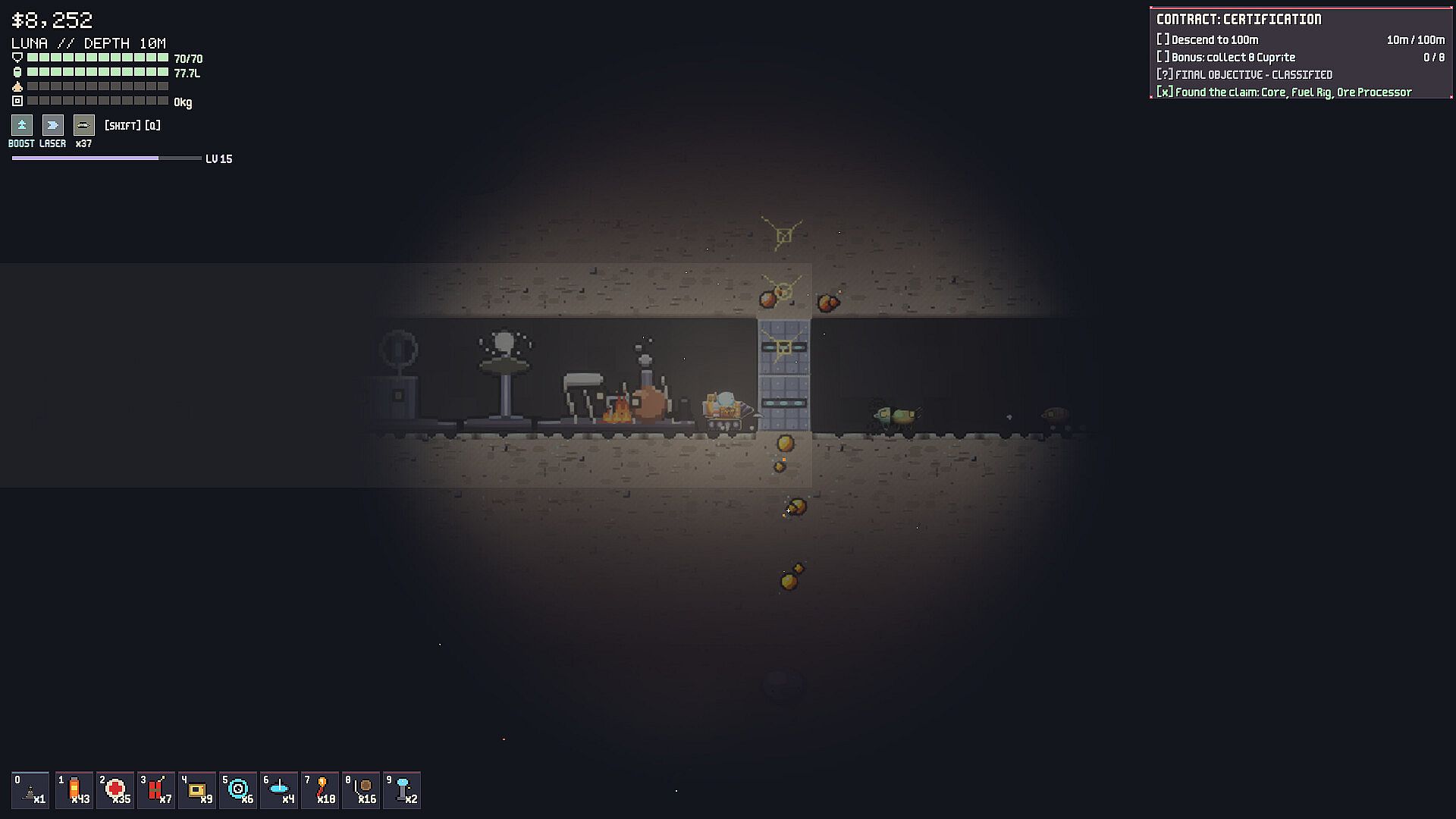
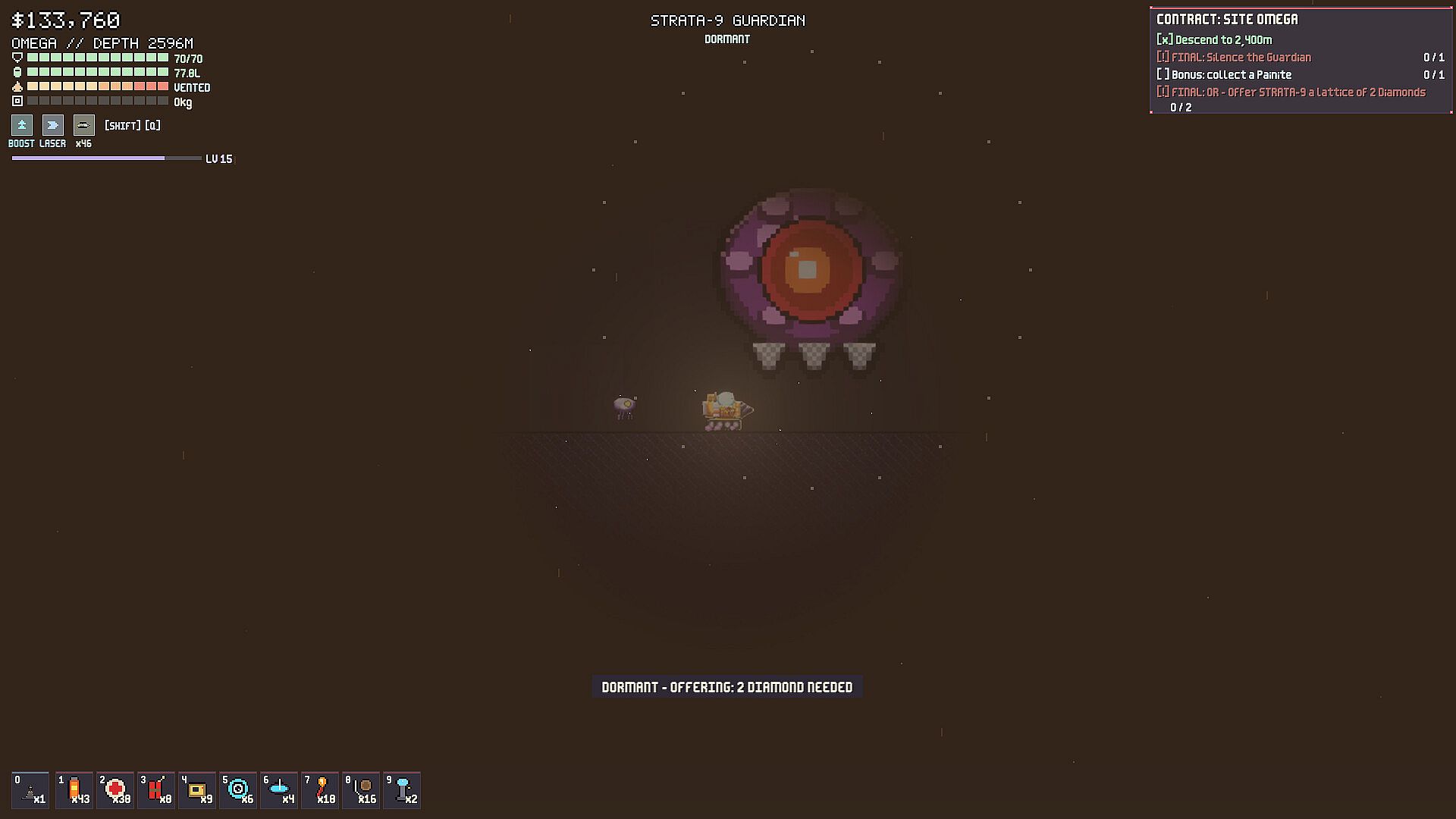
Five named contracts structure the main progression. Certification takes place at the Luna Proving Grounds with gentle rock for a first descent. The Mars Contract involves a classic run plus recovery of a lost beacon. Ember Harvest on Io features widespread lava and thermal cores to extract. The Cold Archive on Callisto emphasizes slow ice drilling alongside gas pockets and forward bases. Site Omega in The Rift presents a bedrock maze filled with every hazard type and the STRATA-9 Guardian.
An open contract on Mars Deep removes quotas and focuses solely on the depth meter. This mode is available from the start. Each contract supports four difficulty settings: Peaceful, Standard, Hard, or Brutal. Higher settings increase seismic storms, worsen cache quality, and raise overall challenge while granting more experience points. Peaceful mode functions as a pure survey charter with no roaming threats, inactive guardians, richer veins, and gentler hazards.
Guardians and Site Interactions
Each location houses a guardian that remains dormant until the final mission of that contract. Players can choose to engage the guardian directly with volleys, dashes, slam shockwaves, and collapsing ceiling mechanics, or locate and deliver a specific offering to feed the machine instead. This choice affects how the run concludes and what rewards become available.
Persistent progression comes from spending earnings on permanent drill and pod improvements. Five equipment lines and multiple drill heads unlock access to different rock classes over time. Relics and fossils collected during runs contribute to a depth log and further customization options.
Is It Worth Playing?
Deepstrata suits players who enjoy deliberate resource management combined with spatial problem-solving and risk assessment in a single-player setting. The emphasis on reading rock formations, timing interventions with Living Strata, and choosing between combat or feeding options for guardians provides distinct decision points on every descent. Peaceful mode offers a focused mining experience without threats, while higher difficulties add tension through increased hazards and storms.
The contract structure and open depth-focused mode support repeated runs with meaningful upgrades. Because the game remains in a pre-release state with no confirmed post-launch updates or seasons at this time, interested players should evaluate the core systems described against their preference for procedural mining loops and fuel-economy challenges. Those drawn to the described mechanics of destructible environments, hazard telegraphing, and upgrade-driven depth progression will find the most direct appeal.











