

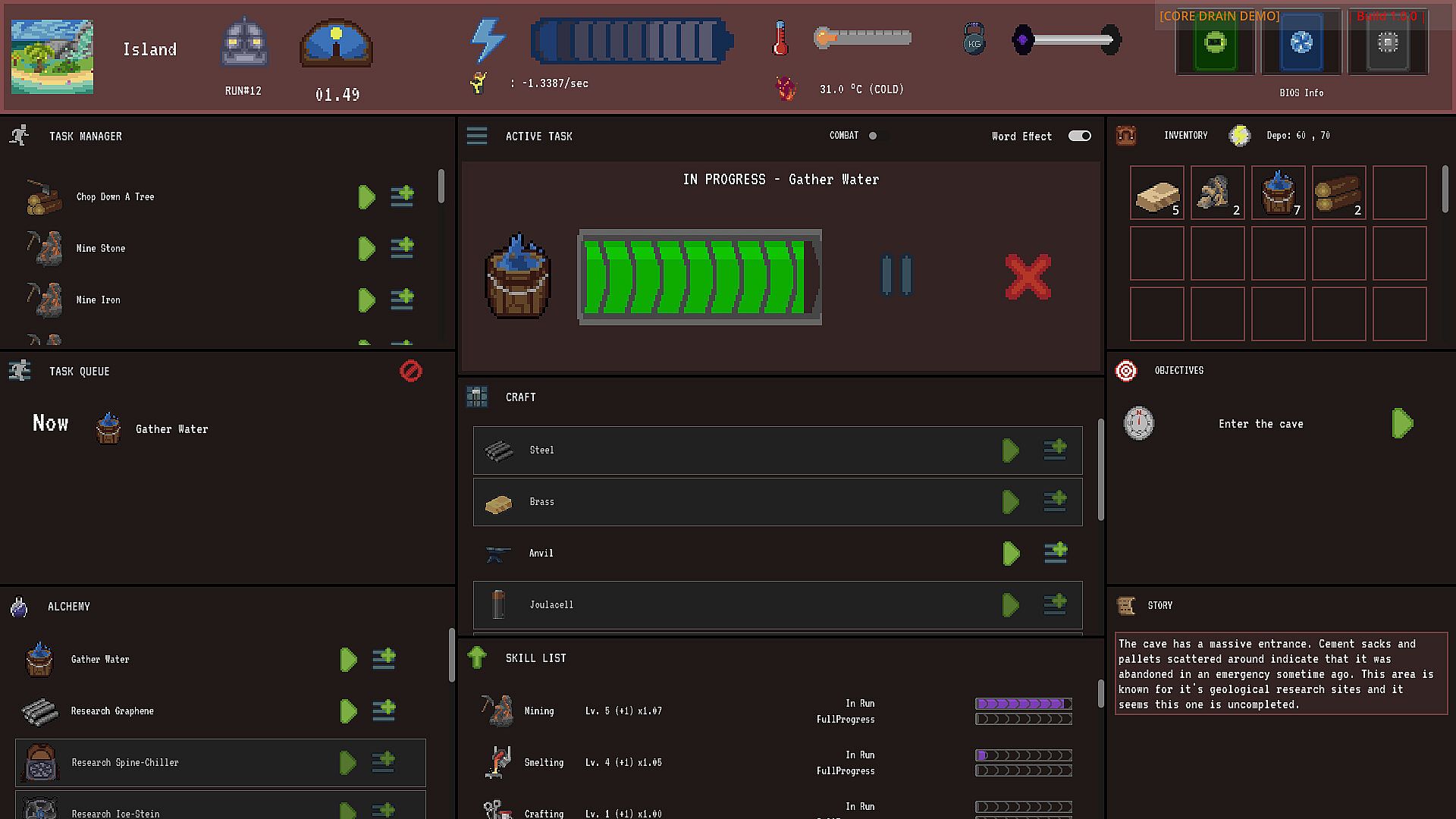
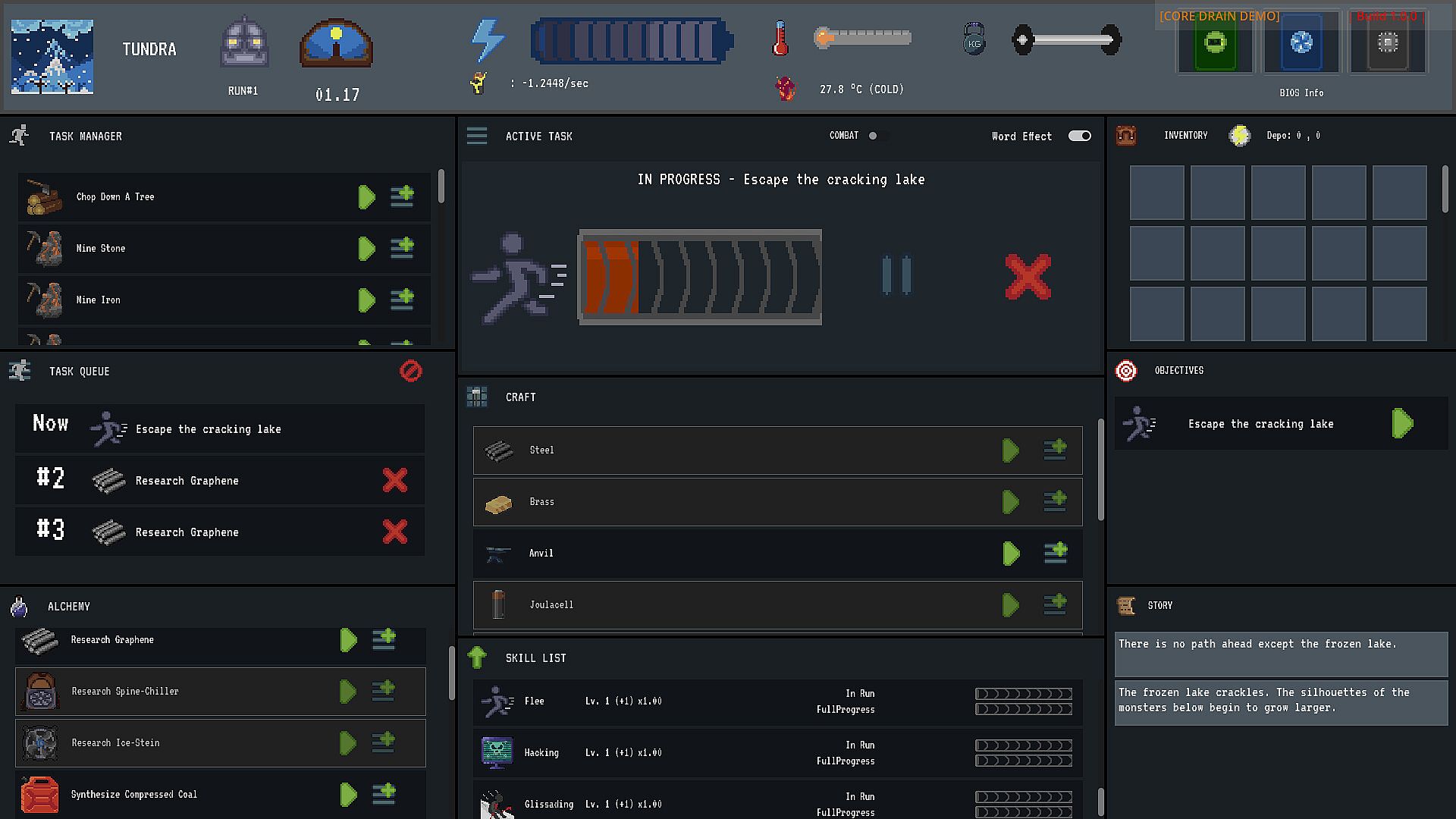
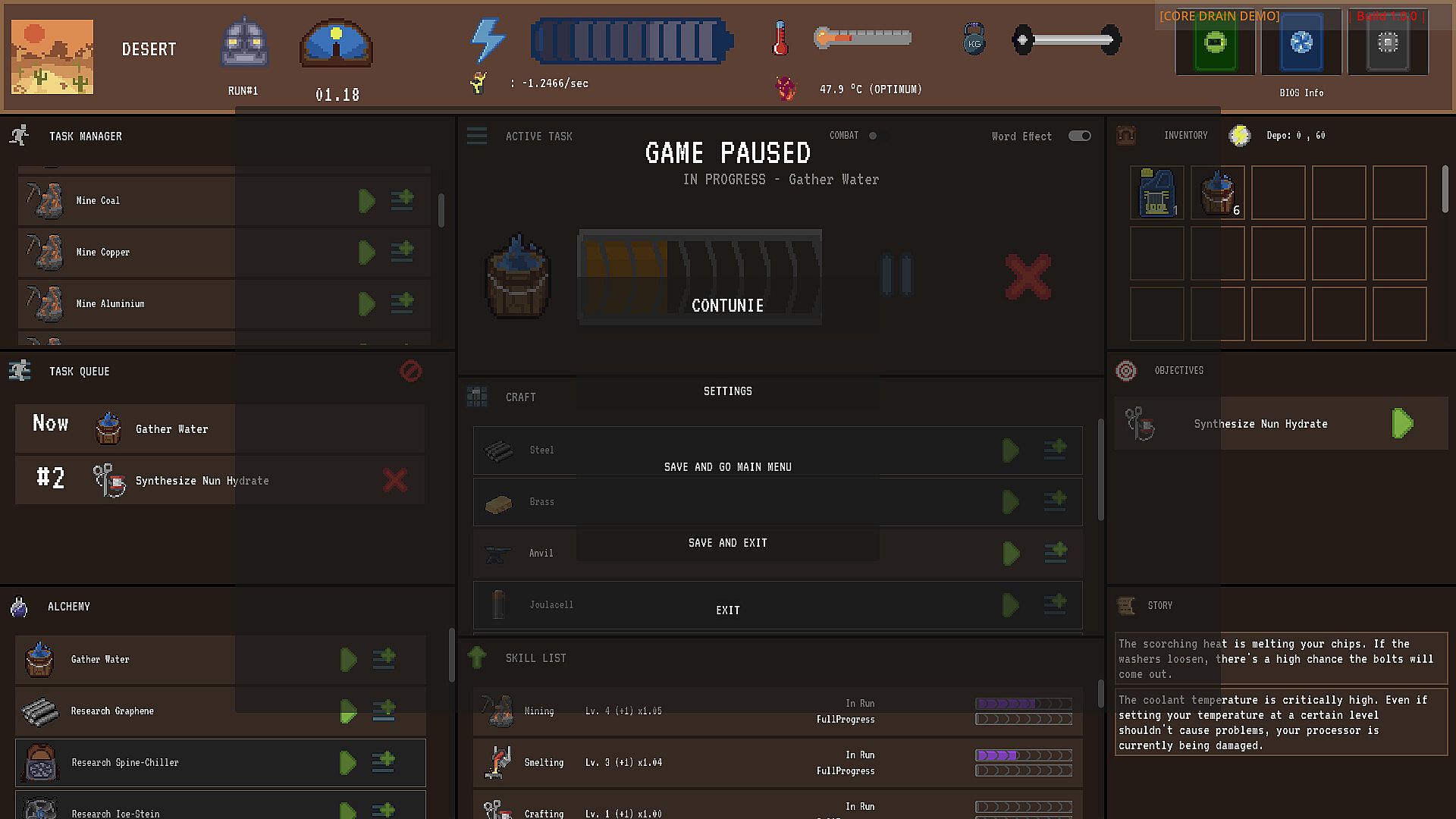
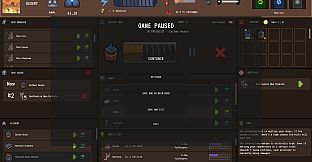
Core Drain is a single-player post-apocalyptic strategy roguelite for PC that places players in control of a robot navigating hostile environments while managing limited energy reserves. The core loop revolves around guiding the machine across varied biomes, where every action influences how long the robot stays operational before energy depletion ends the attempt.
Gameplay
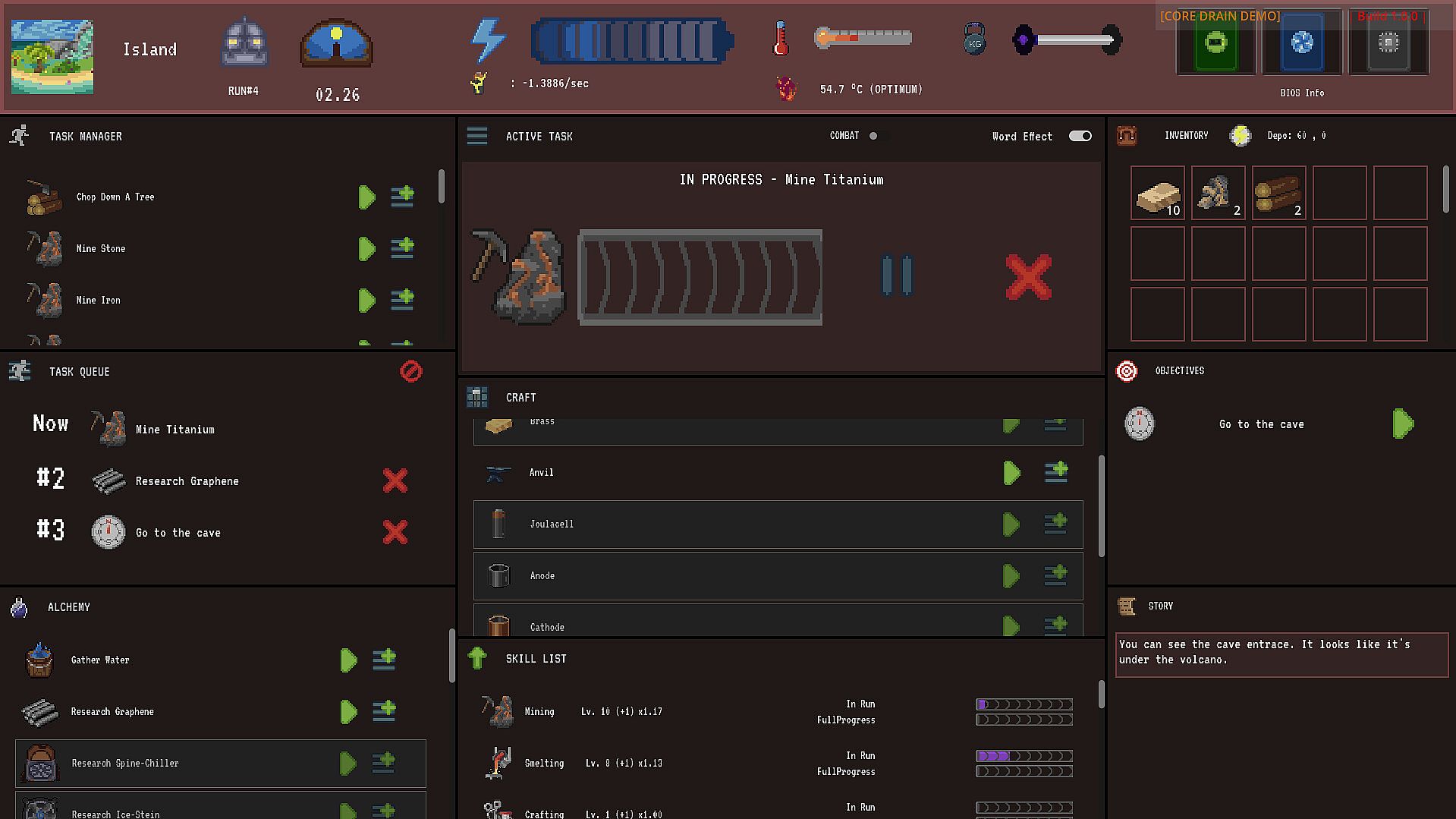
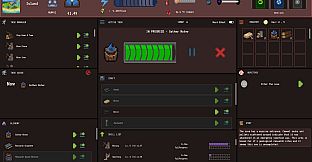
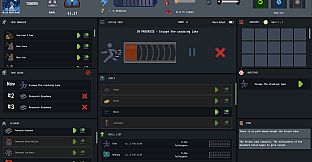
The central challenge centers on energy management. Active tasks such as movement, resource collection, production, and combat steadily drain the robot's power supply. Heat generated by equipment and the total weight of carried materials accelerate this drain, forcing players to make deliberate choices about what to equip and transport. Gathering raw materials allows construction of improved batteries that extend operational time, while objectives provide clear directional goals within each biome.
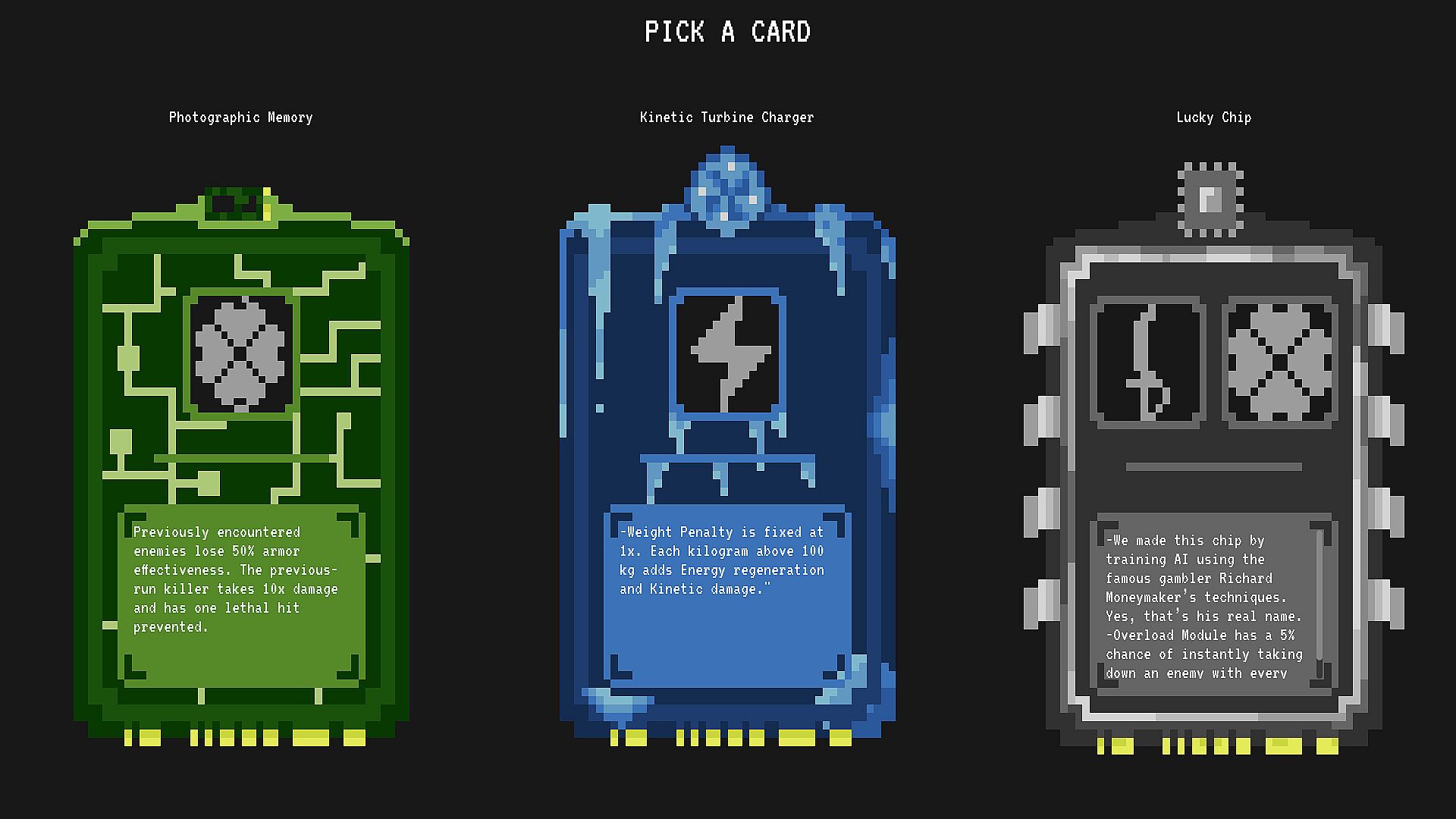
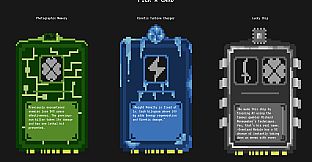
Build customization forms another key layer. Players combine cards, BIOS modules, and hardware pieces whose effects influence production efficiency, combat performance, and how the robot interacts with specific biome demands. These elements interact in ways that reward experimentation, as synergies between components can mitigate energy loss or enhance output during runs. The system encourages balancing immediate power needs against long-term endurance.
Resource gathering and production integrate directly into the survival loop. Materials collected on the move feed into on-the-fly crafting or upgrades, and the carried load itself becomes a variable that shapes strategy. Combat encounters add pressure, requiring players to weigh offensive capabilities against the energy cost of engaging threats while progressing toward objectives.
Game Modes
Core Drain operates as a single-player experience built around repeated runs in a roguelite structure. Each attempt sends the robot into hostile biomes with ordered objectives that guide progression through the environment. There are no separate multiplayer or co-op modes confirmed, keeping the focus on individual decision-making and adaptation across successive attempts.
Runs emphasize a mix of exploration, resource handling, and combat within procedurally influenced biomes. Failure ends the current attempt but feeds into ongoing progression, allowing players to carry forward certain advancements while reviewing outcomes to refine future loadouts. The structure supports iterative improvement without branching into distinct game variants.
Build Systems and Progression
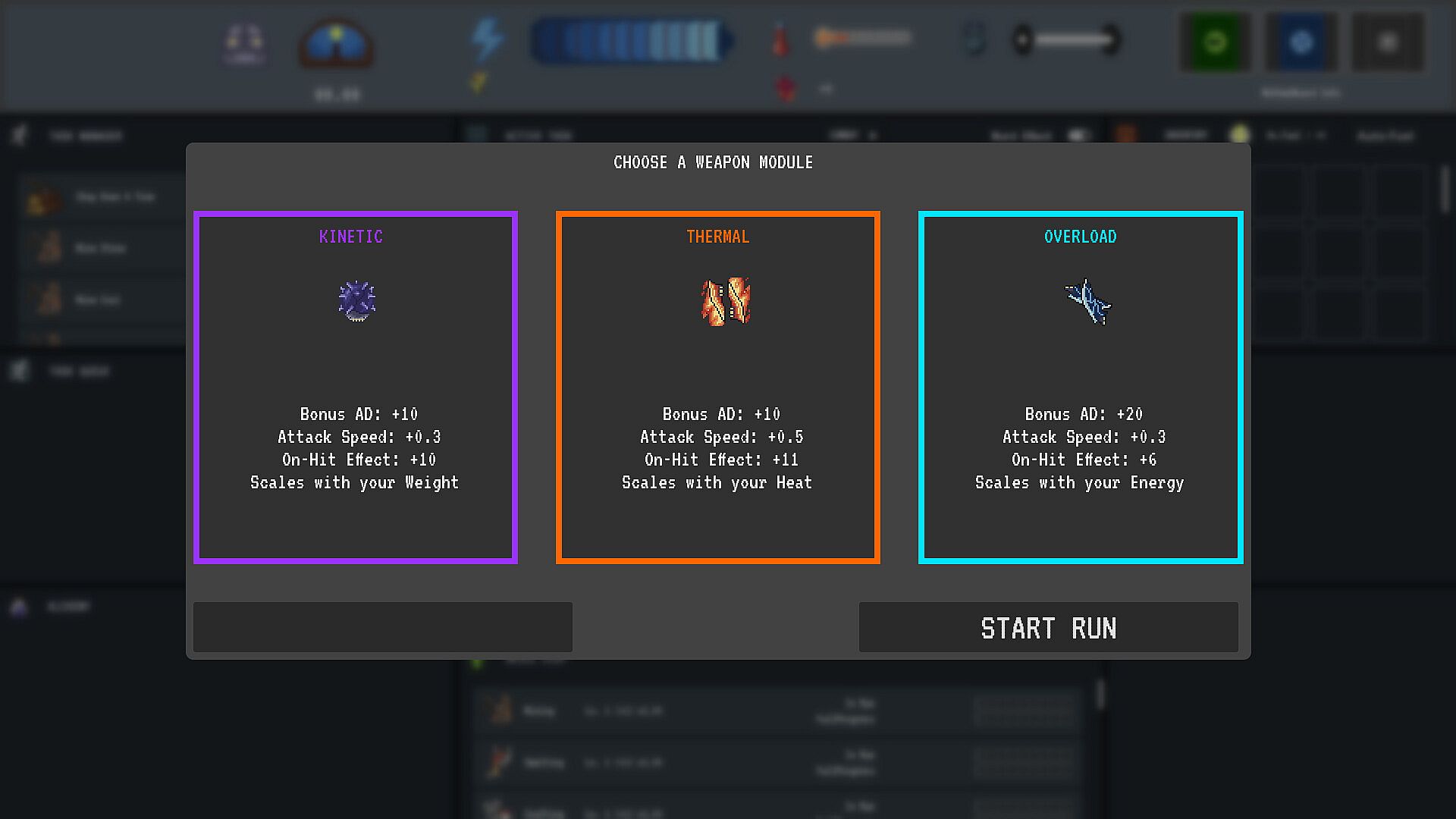
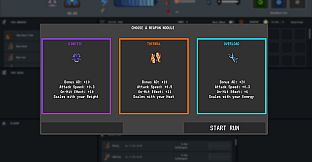
After each run, players gain opportunities to acquire new cards that expand build options for subsequent attempts. Lasting progression elements persist across failures, creating a meta layer where accumulated knowledge and unlocks influence long-term success. Loadout adjustments occur between runs, including selection of a weapon module to suit anticipated biome challenges or play preferences.
The interplay of cards, BIOS, and hardware creates depth in how builds evolve. Effects tie into core systems like energy consumption, material production, and combat effectiveness, allowing different approaches to emerge based on biome requirements. This encourages players to adapt strategies rather than rely on a single configuration.
Is It Worth Playing?
Core Drain targets players who enjoy strategy roguelites centered on resource management, energy constraints, and iterative build refinement in a post-apocalyptic setting. The emphasis on balancing heat, weight, and energy alongside objective-driven runs offers a focused loop for those drawn to thoughtful decision-making over fast-paced action.
With a planned release in January 2027 and no user reviews available yet, reception remains untested. The described mechanics suggest appeal for fans of roguelite progression systems where each failure informs the next attempt through persistent unlocks and loadout tweaks. Availability on PC positions it for strategy enthusiasts seeking a single-player experience built around careful resource and build management.