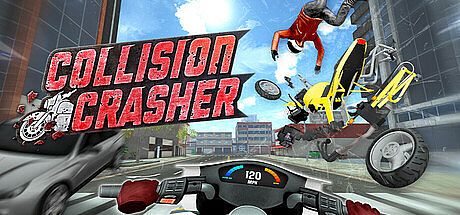



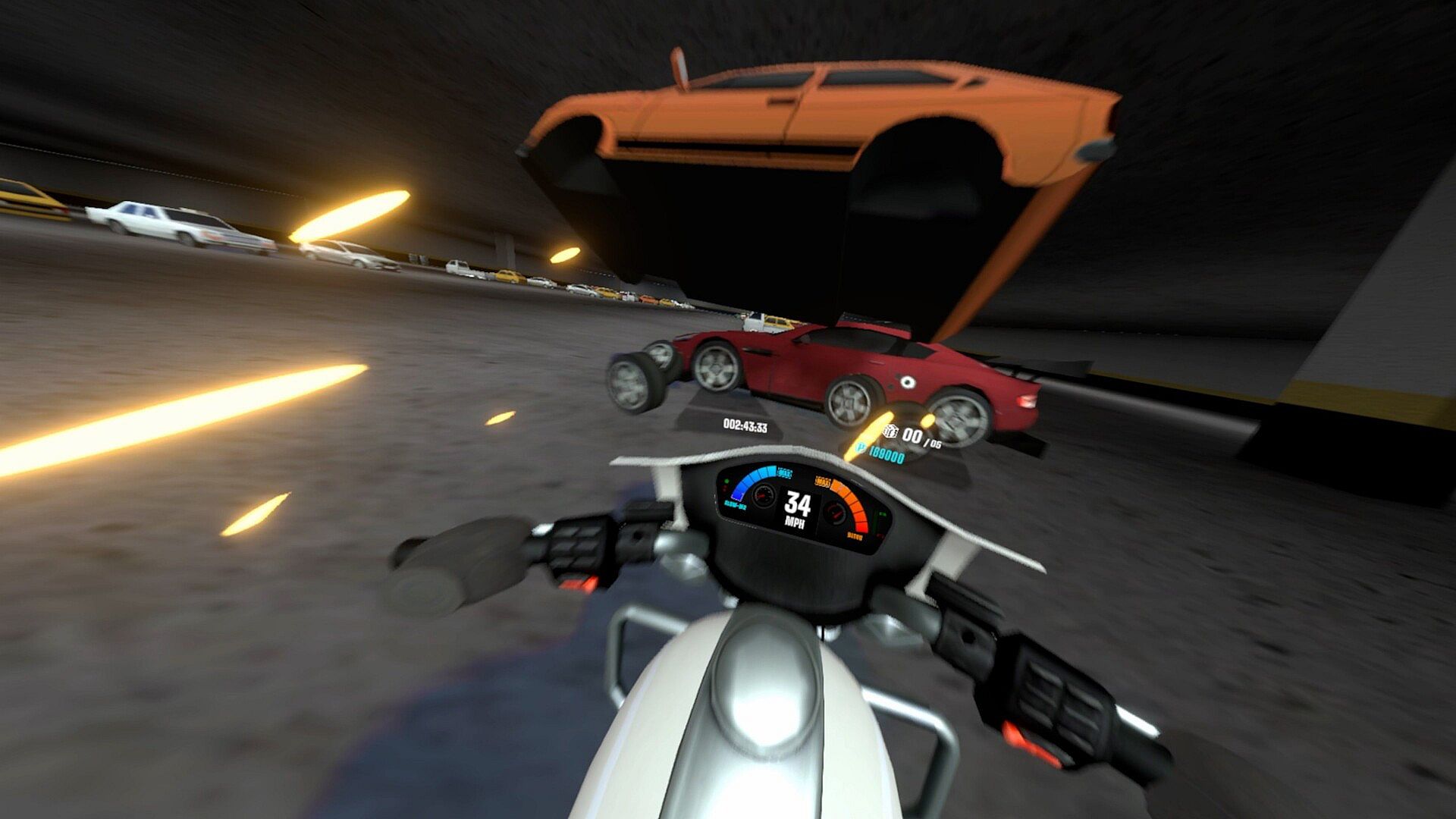
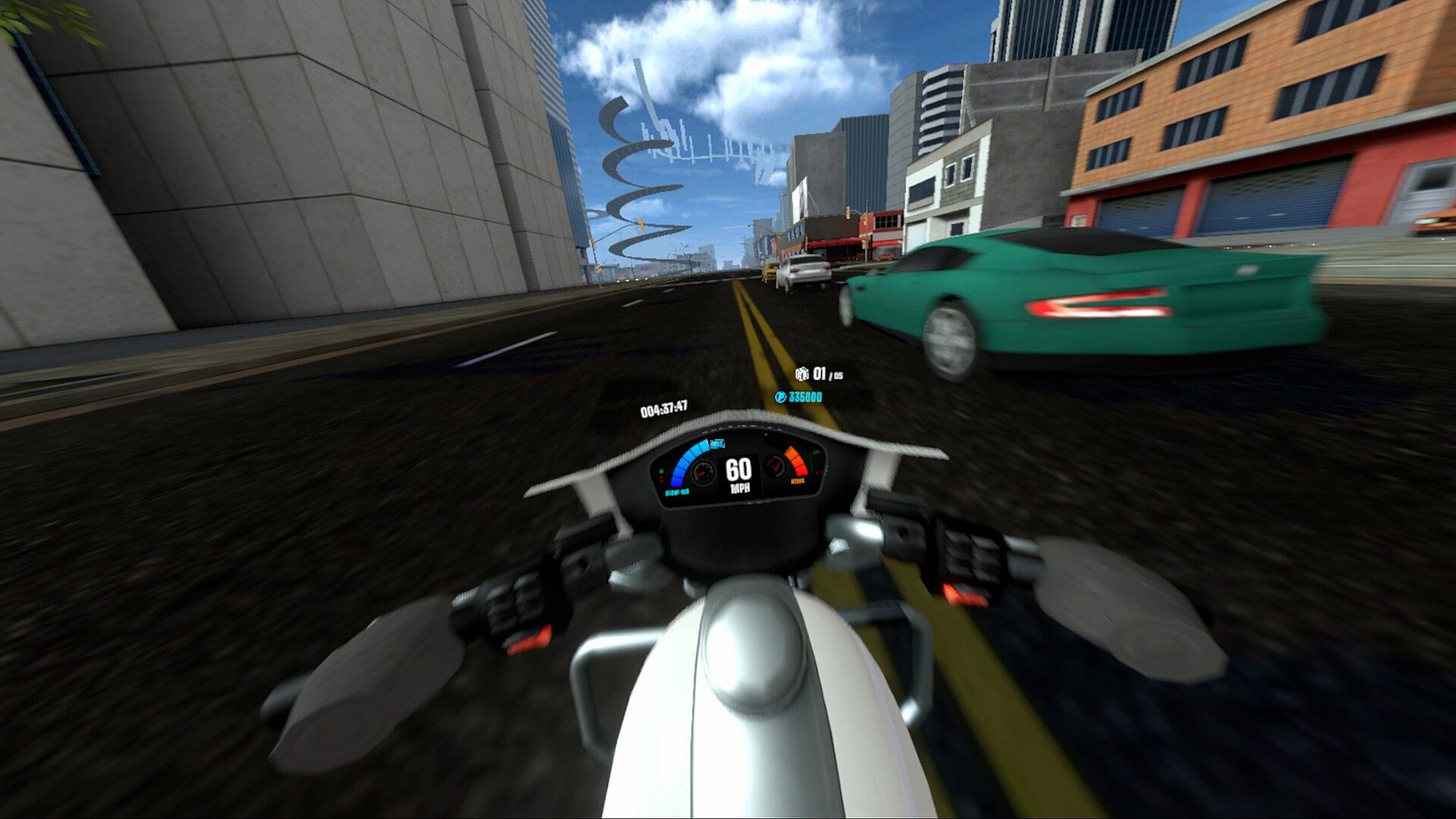
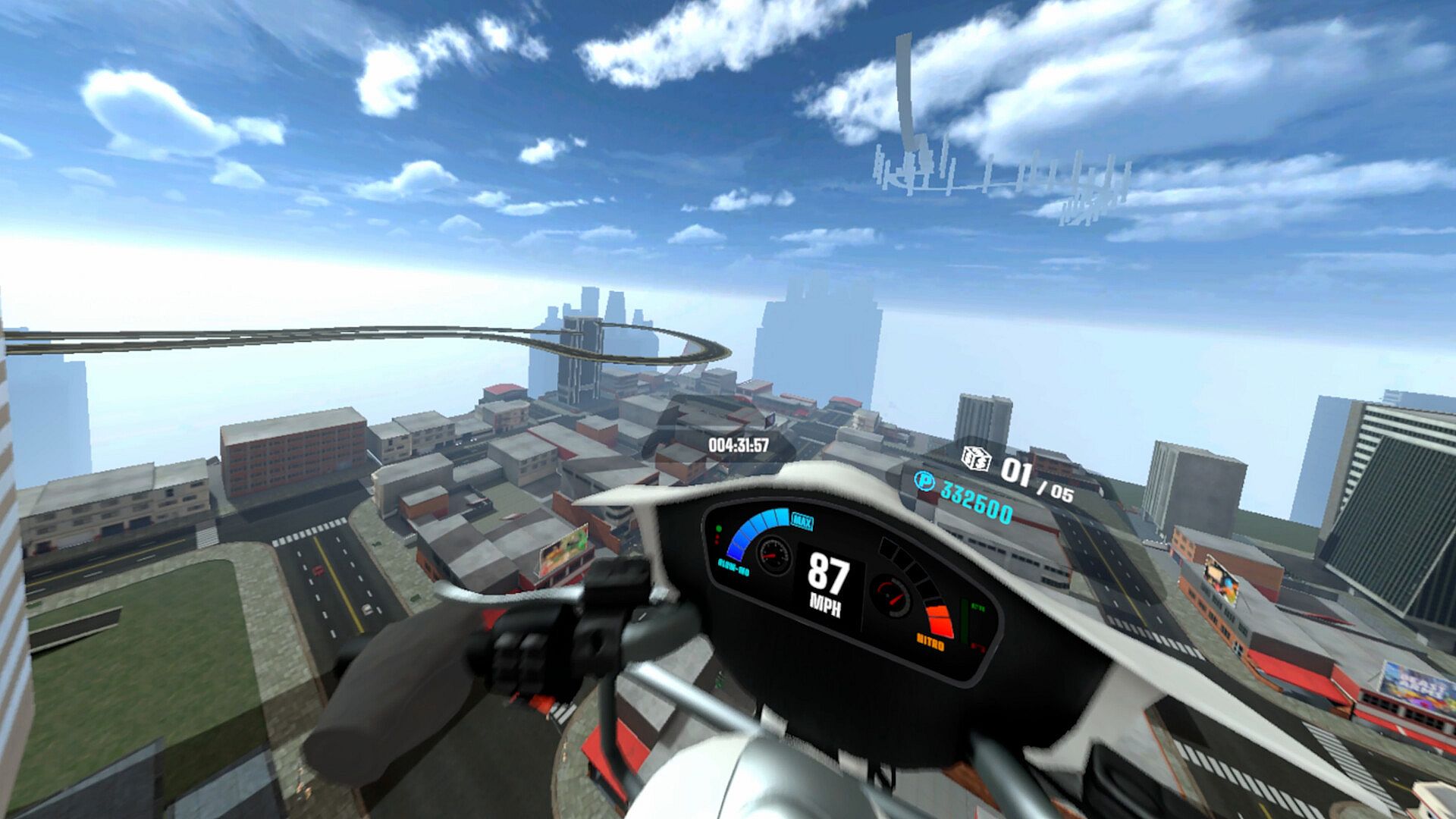
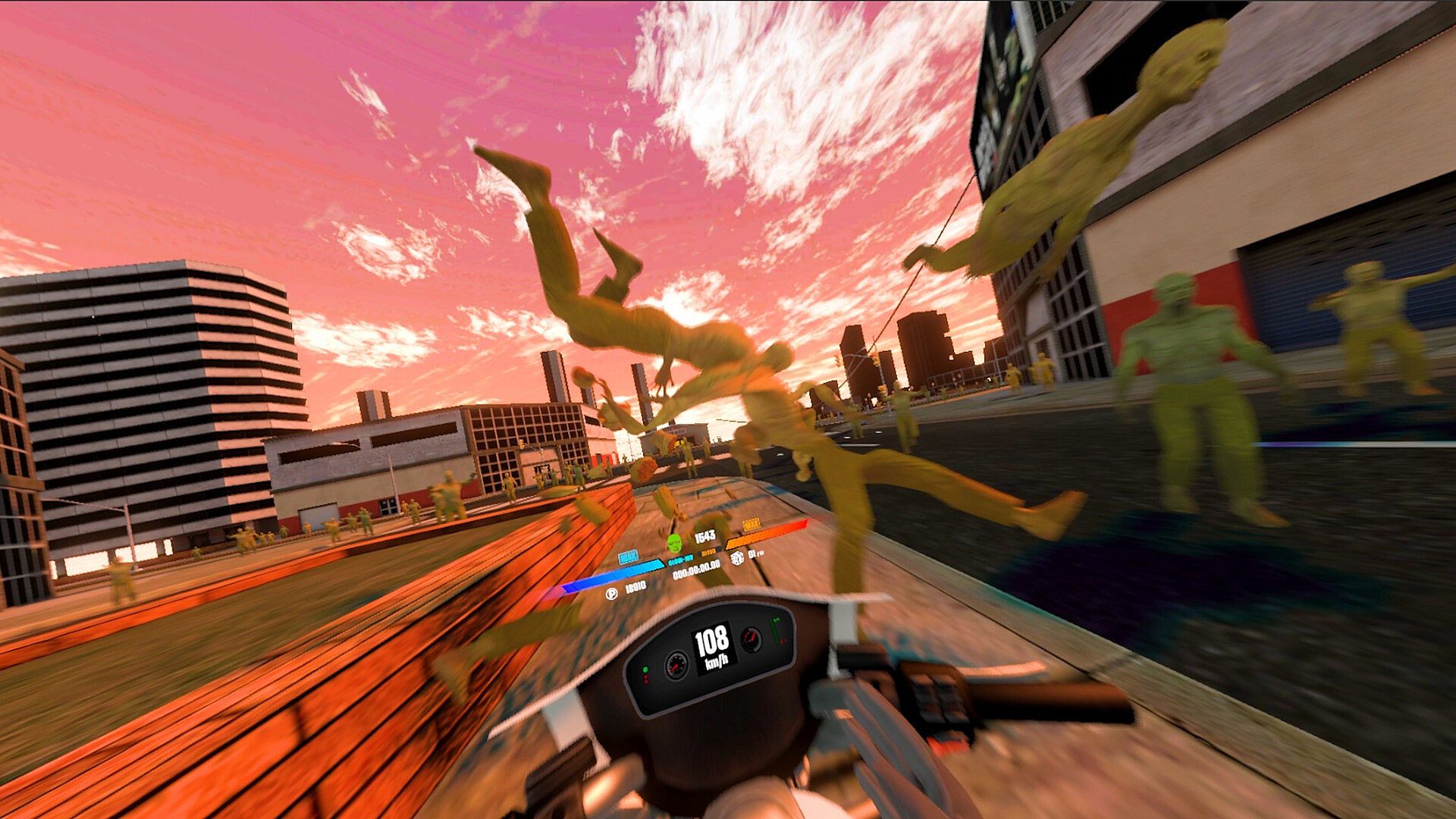
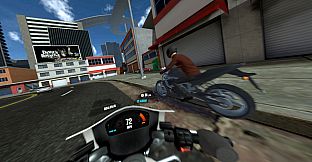
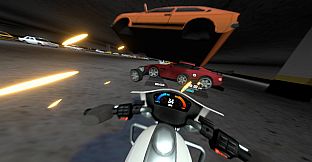
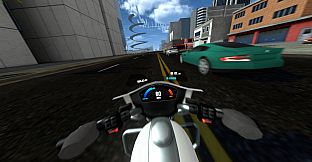
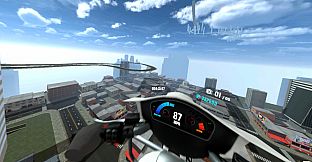
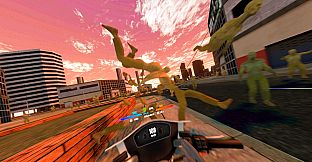
Collision Crasher è un sandbox di guida in VR che fonde azione, indie, casual, simulazione e racing in un'esperienza incentrata sulla guida ad alta velocità in moto e sulla distruzione dei veicoli. Il giocatore si mette alla guida di una motocicletta in una grande area urbana e decide liberamente come interagire con l'ambiente circostante.
Gameplay
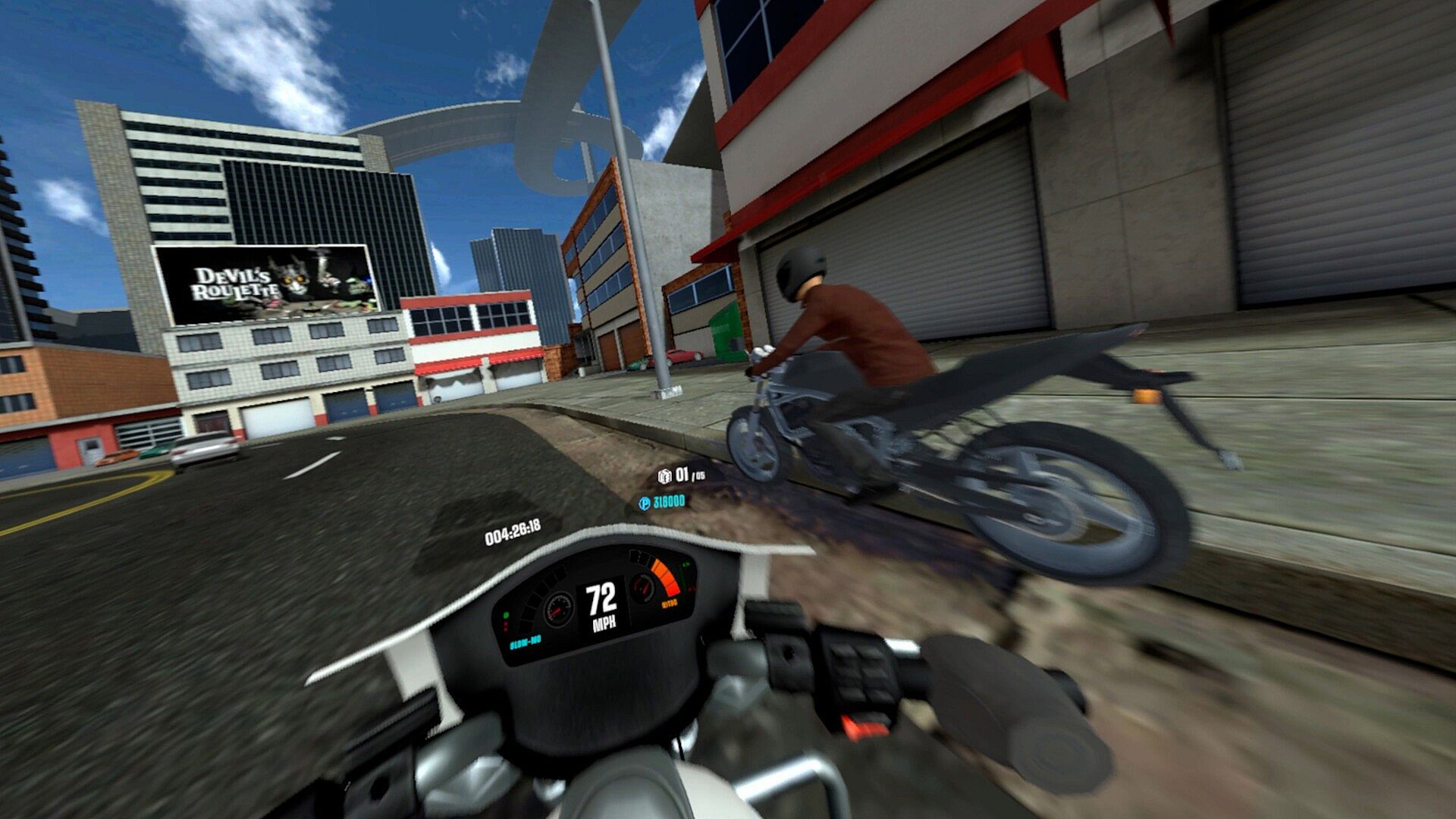
Il ciclo di gioco si basa sulla guida di una moto attraverso una città di un chilometro quadrato. Si può accelerare a velocità elevate tra strade, vicoli e spazi aperti popolati da auto, altre moto, alberi, cartelli e arredi urbani. Gli scontri sono il fulcro dell'esperienza: ogni impatto genera distruzione e reazioni immediate del veicolo. Le curve richiedono un controllo preciso a ritmi sostenuti e si possono ripetere i crash contro muri o ostacoli per studiare il comportamento fisico. Il livello verticale amplia le possibilità: percorsi e rampe si snodano su un dislivello di 300 metri, trasformando ogni tragitto in una sequenza di salite, discese e variazioni di inerzia.
L'esplorazione è completamente libera. Non ci sono obiettivi obbligatori: si può scegliere la propria traiettoria tra passaggi stretti o cercare gruppi di oggetti da colpire. La componente simulativa emerge dalla risposta dei veicoli a velocità, angolazione e variazioni del terreno, mentre l'aspetto casual permette sessioni brevi e ripetute senza sistemi di progressione complessi. Gli elementi racing si manifestano quando si cerca di migliorare i tempi lungo percorsi naturali o tracciati improvvisati tra punti di interesse.
Modalità di gioco
Collision Crasher è solo single-player. All'interno di questa struttura si alternano la libera esplorazione urbana e i percorsi a ostacoli strutturati. Nella modalità libera si scelgono liberamente traiettorie e bersagli da colpire; i tracciati dedicati propongono sfide verticali con salite, discese e sequenze di ostacoli pensate per essere ripetute. Non esistono modalità multiplayer o competitive, per mantenere l'attenzione sull'esperimento personale con velocità e impatto.
Controlli e interazione VR
I comandi in VR posizionano il giocatore direttamente sulla moto: i movimenti della testa e i gesti delle mani gestiscono sterzo, accelerazione e frenata. Il sistema valorizza il feedback fisico durante gli scontri, dove arresti improvvisi o testacoda si traducono in sensazioni evidenti all'interno del visore. Il giocatore può modificare postura e presa per affrontare curve strette o assorbire l'urto di un impatto violento. Questa interazione diretta rafforza la sensazione di simulazione senza introdurre menu o potenziamenti.
Vale la pena giocarci?
Collision Crasher è indicato per chi cerca distruzione open-ended e una guida motociclistica immediata in VR. La struttura single-player supporta sia sessioni rapide di crash sia giri più lunghi in città o lungo i percorsi verticali. Sulla piattaforma principale le prime recensioni evidenziano un buon apprezzamento per la fisica coerente e la libertà di sperimentazione. Il gioco è disponibile su visori VR compatibili con PC tramite la versione Quest e, dal lancio, non sono state annunciate stagioni o aggiornamenti rilevanti. Chi cerca un'esperienza di guida focalizzata esclusivamente sugli scontri, senza narrazione né competizione, troverà un titolo fedele alla sua descrizione.