


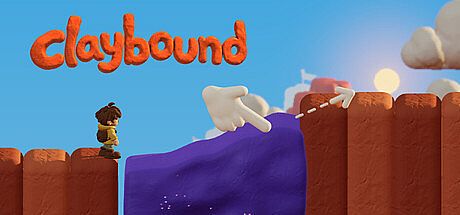


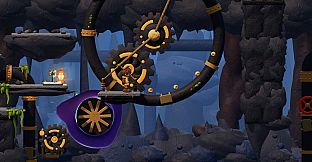

Claybound is a single-player platformer adventure available on PC in which players shape and reshape the clay environment to create their own paths forward. The core loop revolves around manipulating lumps of clay into functional structures like ramps, bridges, boulders, and walls, then using those creations to run, jump, and stomp through hand-crafted levels. This mechanic sets the game apart from traditional platformers that provide fixed routes, instead giving players direct control over the terrain itself.
Gameplay
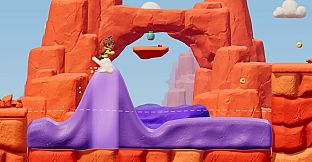
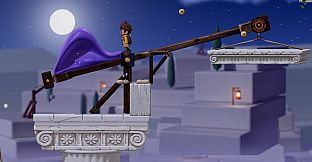
The central system lets players push, stretch, roll, or pack clay into whatever shape suits the moment. A simple lump can become a ramp to reach higher ground, a bridge to cross gaps, a rolling boulder to smash obstacles, or a packed wall for support. These changes happen in real time, and the clay responds with a tactile, deformable quality that feels responsive under keyboard or controller input. Levels incorporate environmental interactions such as rope lifts, sinking surfaces, flooded areas, and mechanical elements like gears and presses that players must repair or activate using their shaped clay. The eight chapters progress through distinct settings, each introducing new clay behaviors and structural challenges that build on previous mechanics without overwhelming the player.
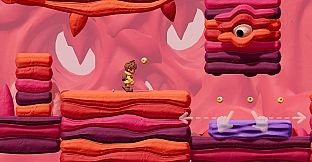
Exploration rewards careful observation, as hidden collectibles appear in each chapter for those who experiment with different clay configurations. Checkpoints allow repeated attempts at tricky sections, encouraging players to refine their solutions and discover more efficient or creative routes. The visual style emphasizes a stop-motion clay aesthetic with soft lighting and shadows that highlight the material's texture across every environment.
Game Modes
Claybound operates as a linear single-player experience focused on progressing through its eight chapters in sequence. There are no separate competitive or cooperative modes; the entire game centers on the campaign journey from the opening canyon to the final kiln. Players advance by solving platforming and shaping puzzles within each themed area, with the ability to revisit chapters via checkpoints to improve runs or locate additional items. The structure emphasizes creative problem-solving over speed or score chasing, though the checkpoint system naturally supports replay attempts for better performance.
World and Progression
The journey spans eight distinct chapters that introduce varied clay properties and level themes. Early areas feature open canyons with rope mechanisms and wet riverbed clay, while later sections involve industrial kilns, flooded villages, living forests with spore vents, suspended towns on ropes, moonlit quarries, dreamlike orchards, and the climactic kiln itself. Progression feels organic as new clay manipulation options appear alongside environmental hazards that require specific shaping solutions. Broken elements such as damaged floors or jammed machinery can be patched directly with clay, turning repairs into part of the forward momentum.
Is It Worth Playing?
Claybound suits players who enjoy creative platformers where the environment itself becomes a tool rather than a fixed obstacle. The shaping mechanic delivers consistent satisfaction through direct feedback and visible results, supported by an original soundtrack and detailed sound design that captures the material's squishy and crunchy qualities. Keyboard and controller support ensures accessibility for different play styles. Those seeking a focused single-player adventure with tactile puzzle-solving will find the eight-chapter structure substantial enough for multiple sessions, particularly when hunting collectibles or optimizing paths. The free browser demo provides an immediate way to test the core clay manipulation before committing further.












