


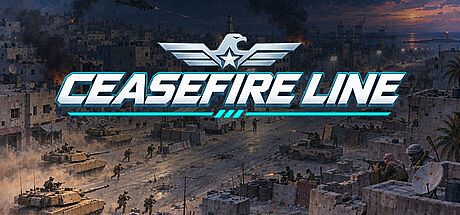


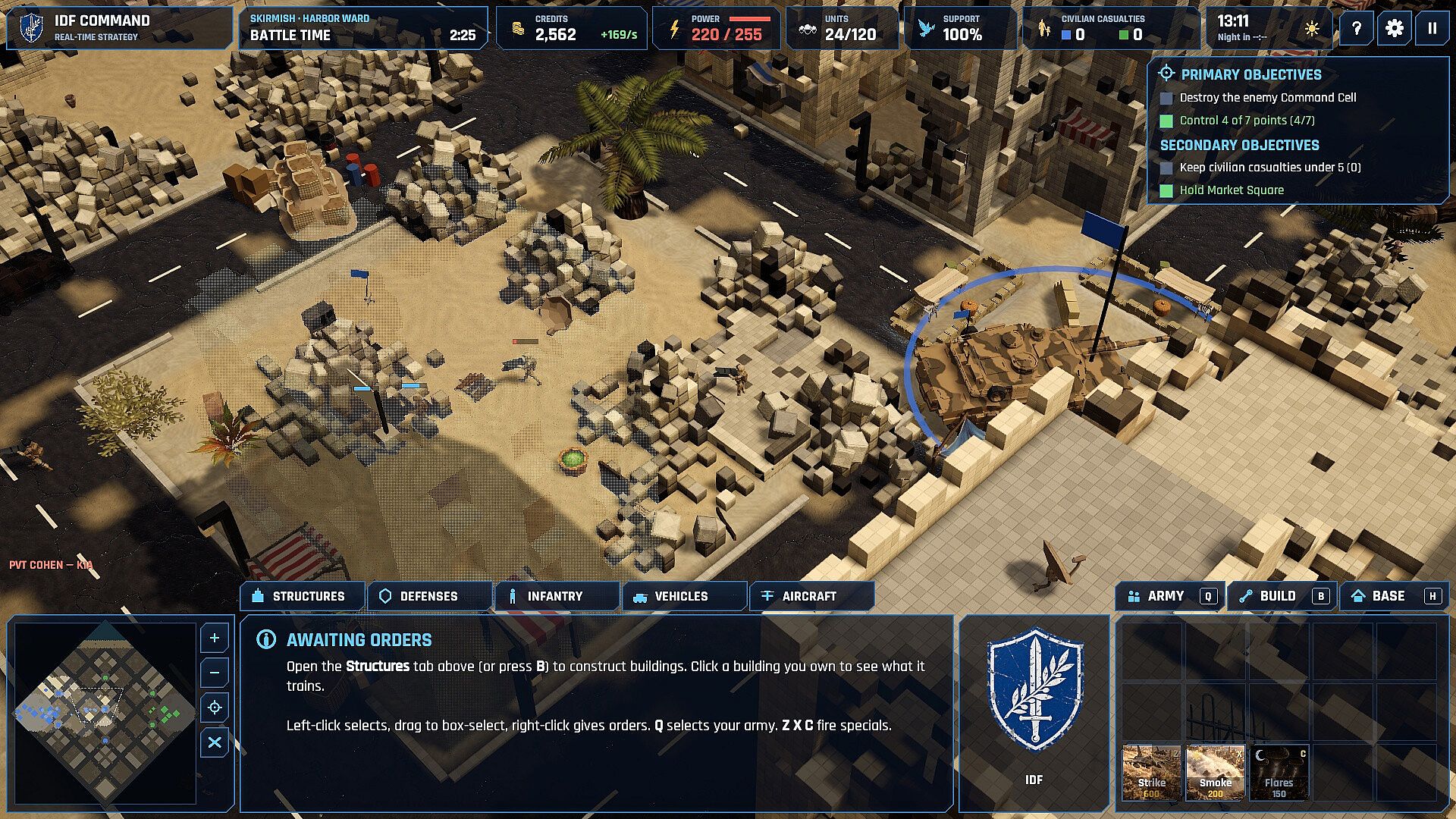
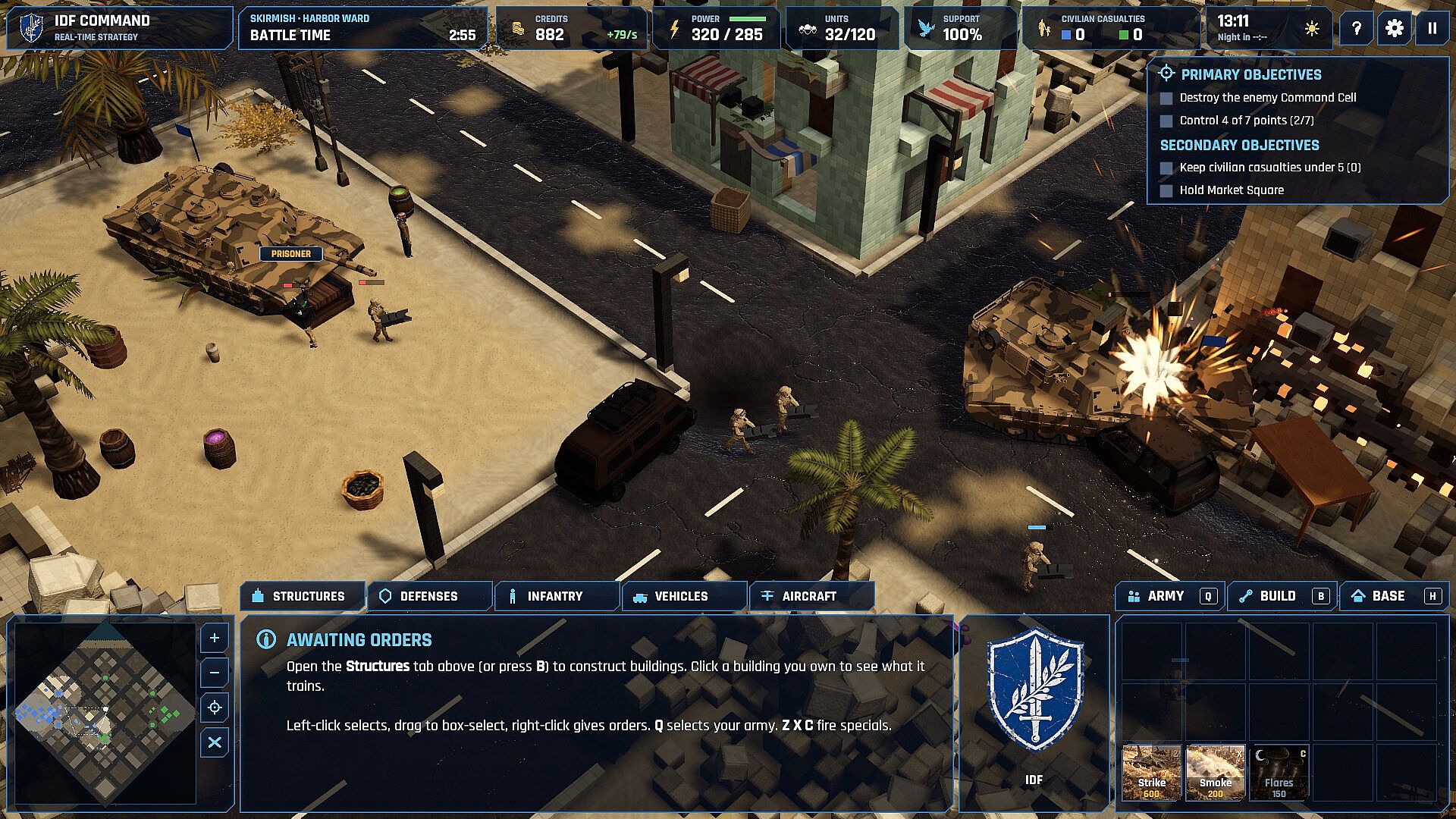
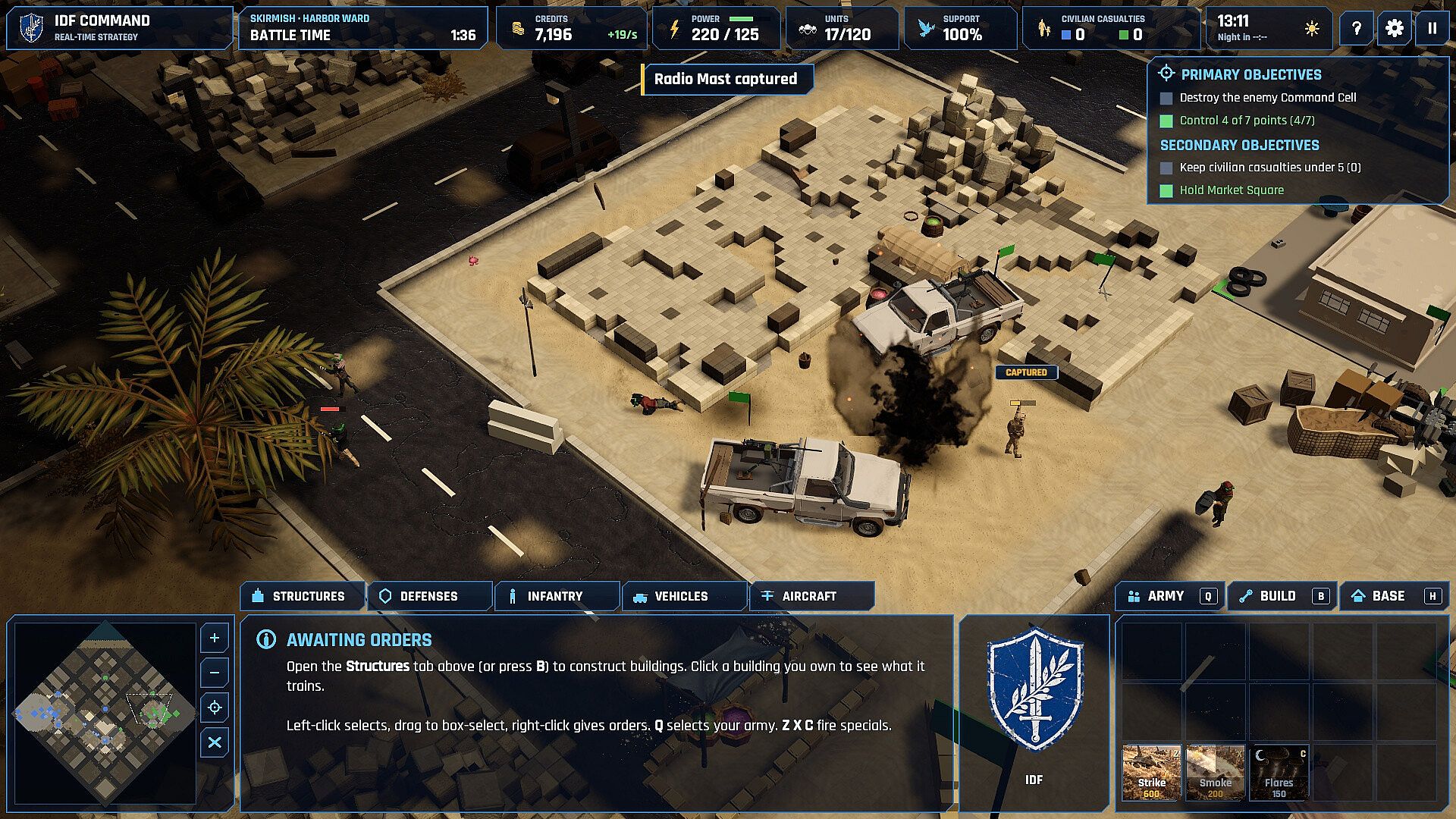
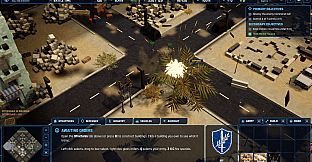
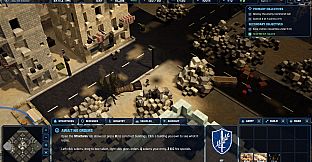
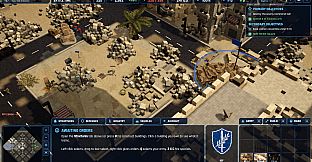
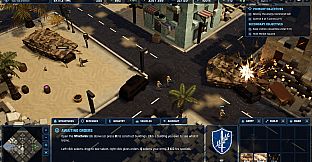
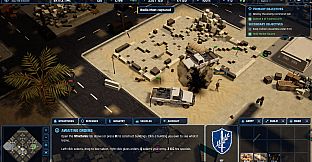
Ceasefire Line is a real-time strategy game set in a single ruined coastal city where three asymmetric forces clash over contested ground. Players command one of the three factions in matches that emphasize base building, control point capture, army composition, and the physical destruction of the urban environment itself. The game places equal weight on tactical combat and the consequences of fighting amid civilians, with every structure and noncombatant affecting the outcome.
Gameplay
The core loop centers on establishing a foothold, expanding through control points, and deploying units tailored to each faction's strengths. Israel Defense Forces units favor precision and firepower with heavy armor, attack helicopters, interceptor batteries, and air strikes, though they carry higher costs. Hamas Militant Wing forces rely on speed, concealment, and asymmetric tools such as RPG teams, technicals, mortars, rocket trucks, tunnel networks, and IEDs. UN Peacekeepers emphasize durability and area denial through medics, armored carriers, checkpoints, ceasefire zones, and civilian shelters. Each faction receives its own roster of units and structures along with three unique special abilities. Maps are mirrored to ensure balanced starting positions regardless of which side a player selects.
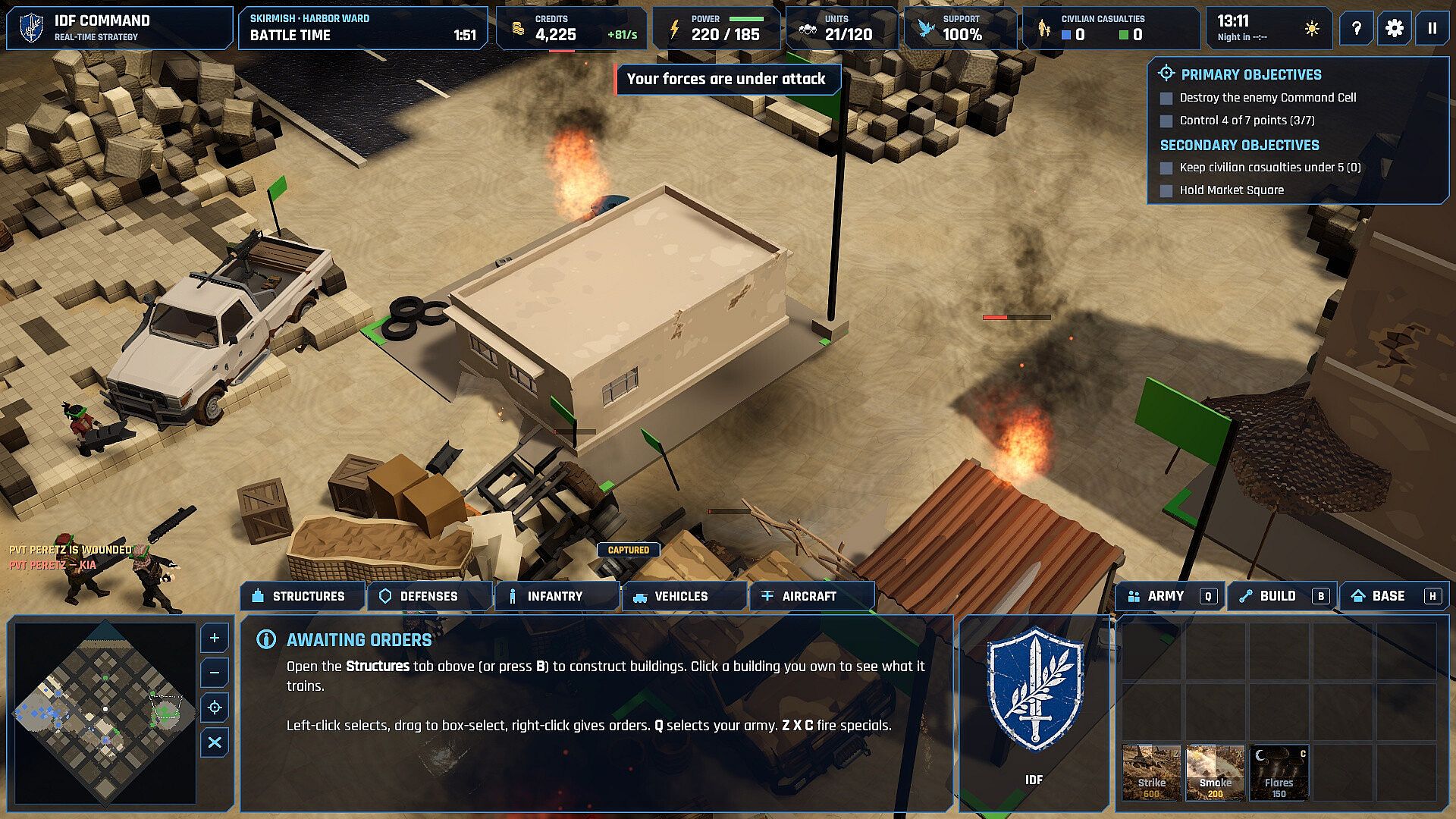
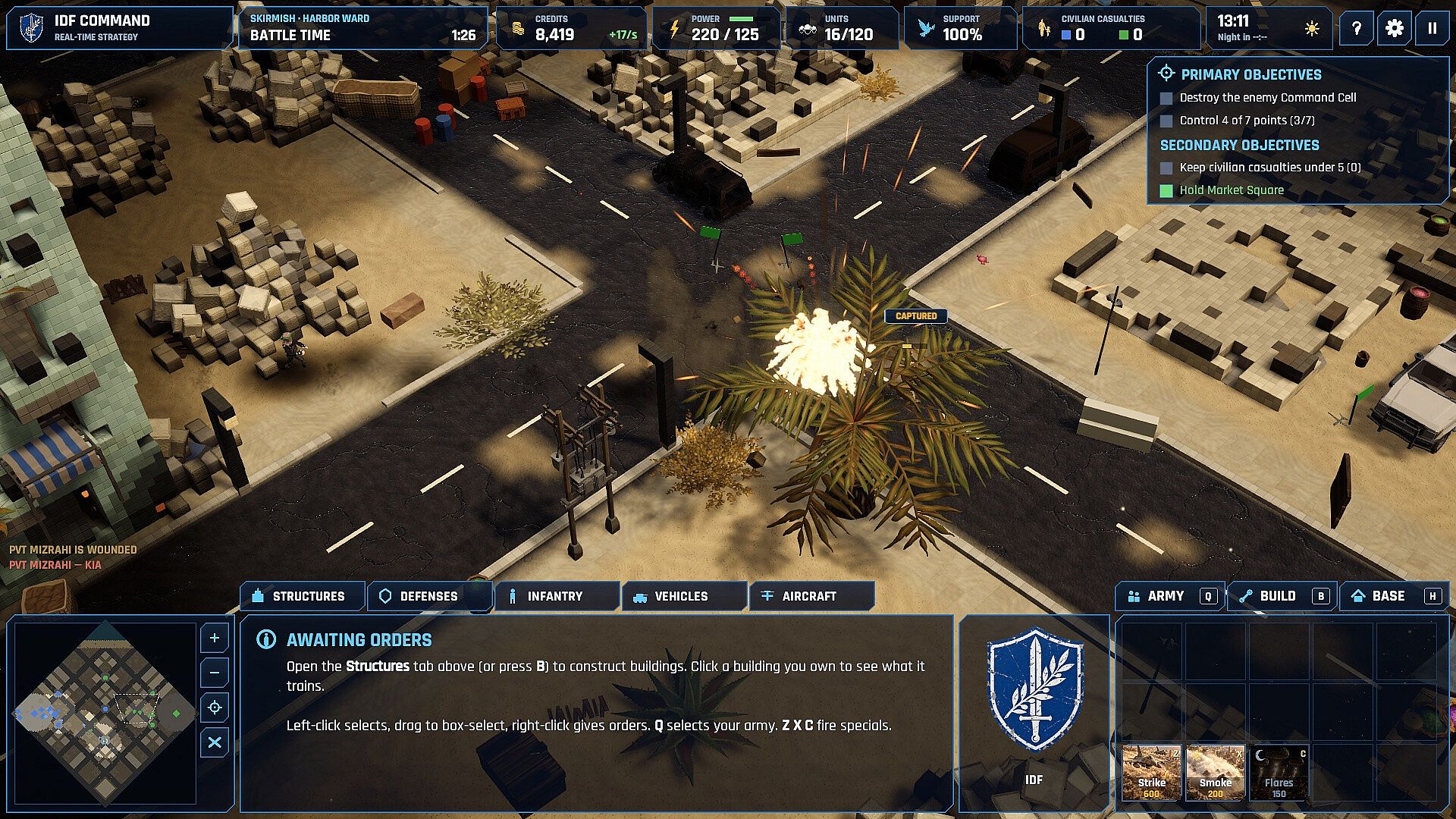
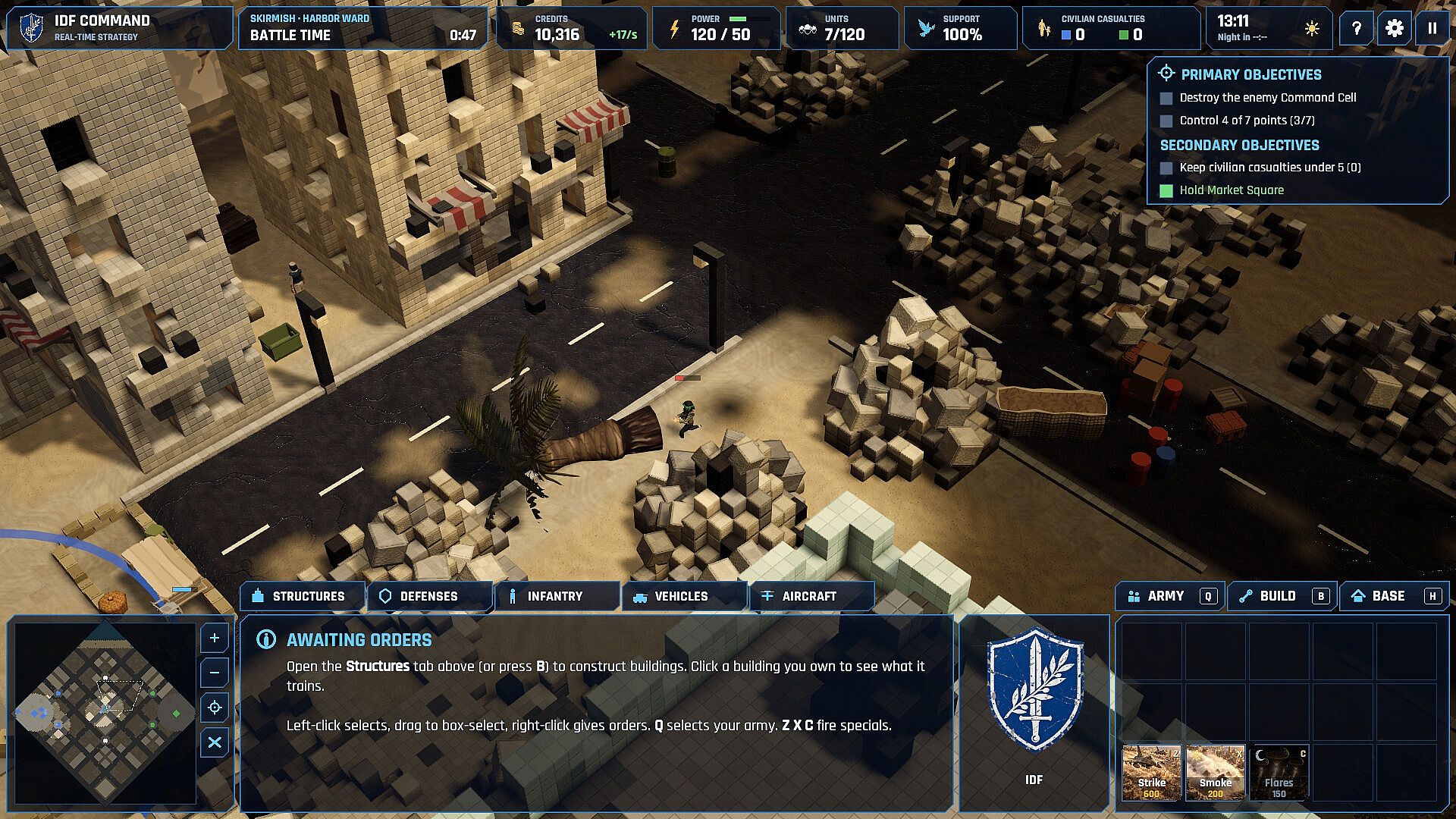
Destruction operates at a granular level. Buildings consist of quarter-metre blocks that sustain localized damage from incoming fire. Breaches expose interior details such as furniture, and sufficient structural loss triggers realistic collapse rather than scripted sequences. Rubble persists on the map, altering movement for vehicles and infantry alike. Infantry can garrison windows and rooftops for defensive positions until the building is cleared or demolished around them. A live day-night cycle governs ability availability, forcing players to adapt tactics as daylight restrictions lift or impose new limitations after dark.
Civilian presence adds a persistent scoring layer. Noncombatants are never valid targets, and any deaths attributed to a player's actions deduct from their final tally. Protecting or evacuating civilians forms an independent objective that can influence overall success.
Game Modes
Campaign mode delivers eight single-player missions against the computer. Each mission isolates a specific skill that transfers to competitive play, including economy management in the opening phase, defending against early aggression, coordinating combined arms, accumulating points, scouting and responding to enemy movements, conducting sieges, and leveraging air superiority.
War cards provide progression outside of matches. Completing campaign objectives, bonus goals, and staff plans awards cards that players spend in the Armory to unlock additional units and abilities for use across other modes.
Skirmish allows direct confrontation between any two factions with adjustable difficulty and opponent behavior profiles. All content remains available without further unlocks. Battle report summarizes every completed match with detailed statistics on kills, losses, army strength over time, income trends, an overall letter grade, and commendations for notable performance. Boot camp serves as an interactive tutorial that covers basic controls and walks through the opening minutes of a typical engagement.
Setting and Design Choices
The game unfolds in a fictional city with invented locations and names. No faction receives heroic framing. The design tracks civilian impact and structural cost to highlight the toll of urban combat on the population caught in the middle. Mirrored maps and faction asymmetry encourage repeated matches to explore different matchups and counter-strategies.
Is It Worth Playing?
Ceasefire Line targets players who enjoy real-time strategy with layered systems around destruction, civilian management, and time-of-day mechanics. The emphasis on persistent rubble, garrisoning, and asymmetric unit rosters offers depth for those who value environmental interaction and careful army composition over pure unit micro. Single-player options through the campaign and skirmish provide structured practice, while the battle report supplies concrete feedback after each session. As an upcoming title with no released reviews or live player data, its appeal rests on how well the described mechanics resonate with fans of deliberate, consequence-driven strategy games on PC. Those drawn to urban warfare simulations that treat the battlefield as a changing, costly space will find the most direct match.











