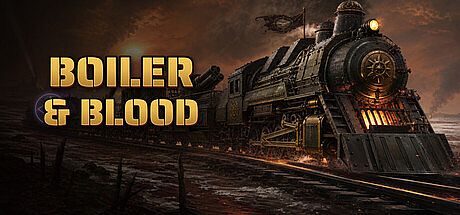


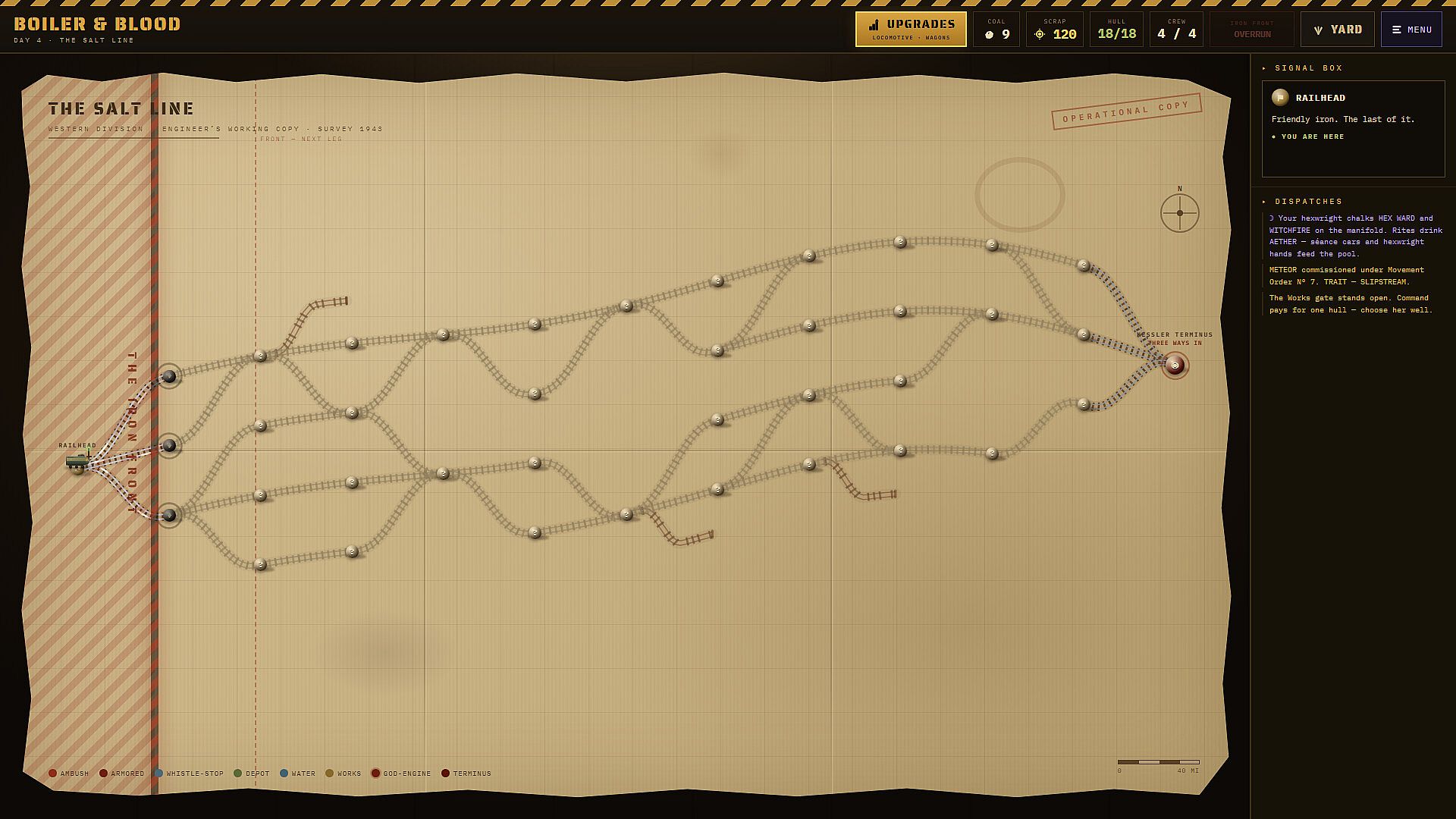
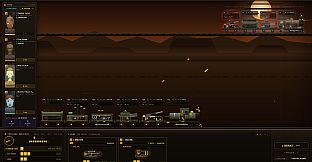
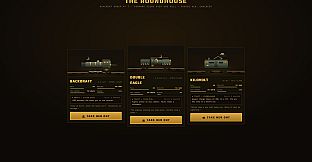
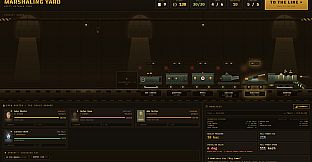
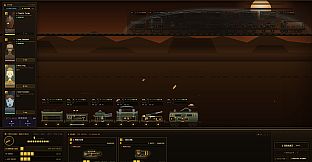
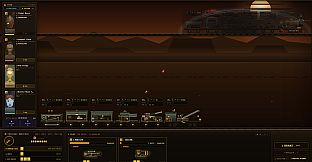
Boiler & Blood è uno strategico gestionale che fonde elementi roguelite con combattimenti tattici in tempo reale con pausa su PC. Il giocatore costruisce e gestisce un treno corazzato dieselpunk, bilanciando le risorse mentre fugge da un esercito inseguitore attraverso territori ostili.
Gameplay
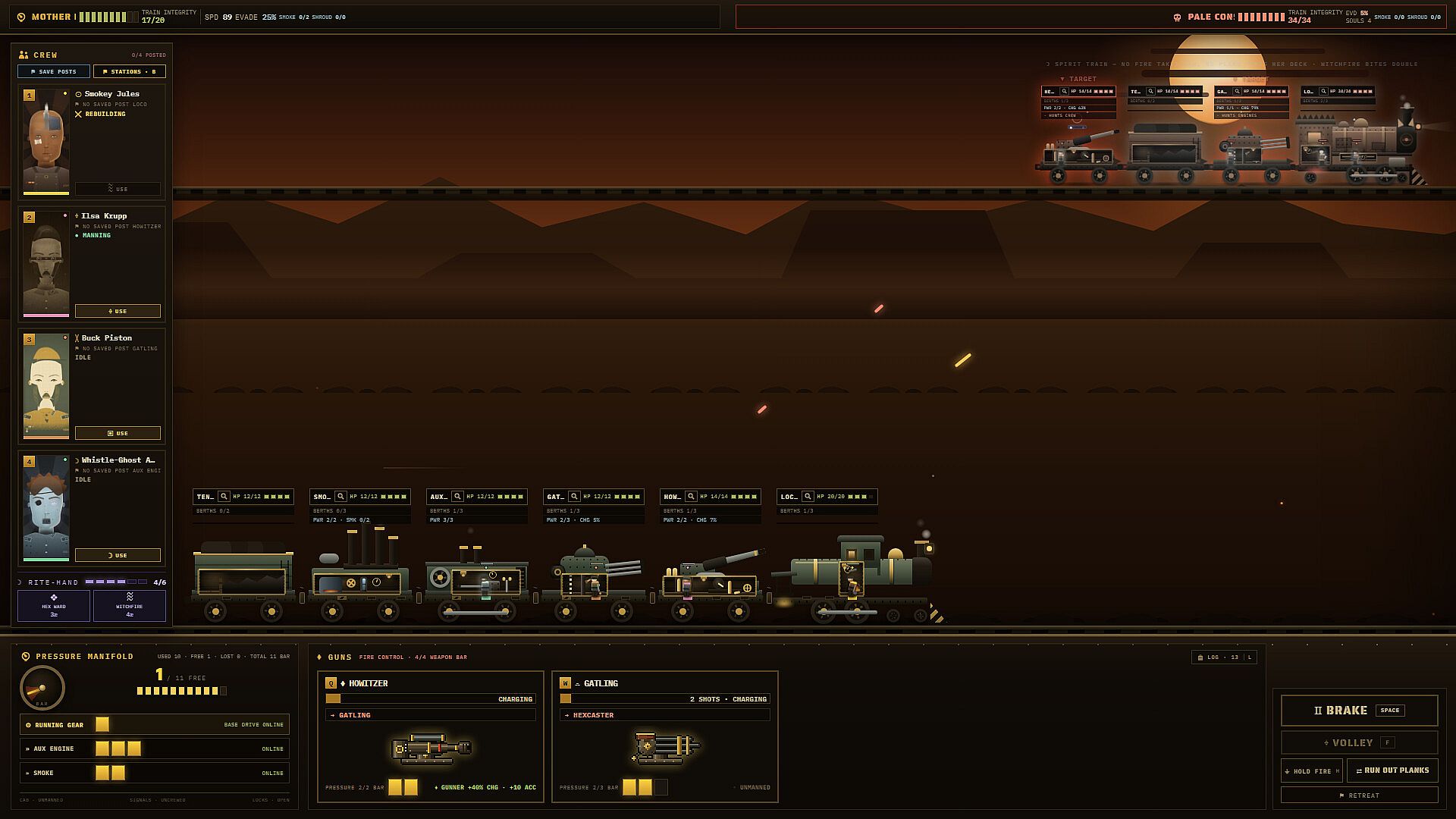
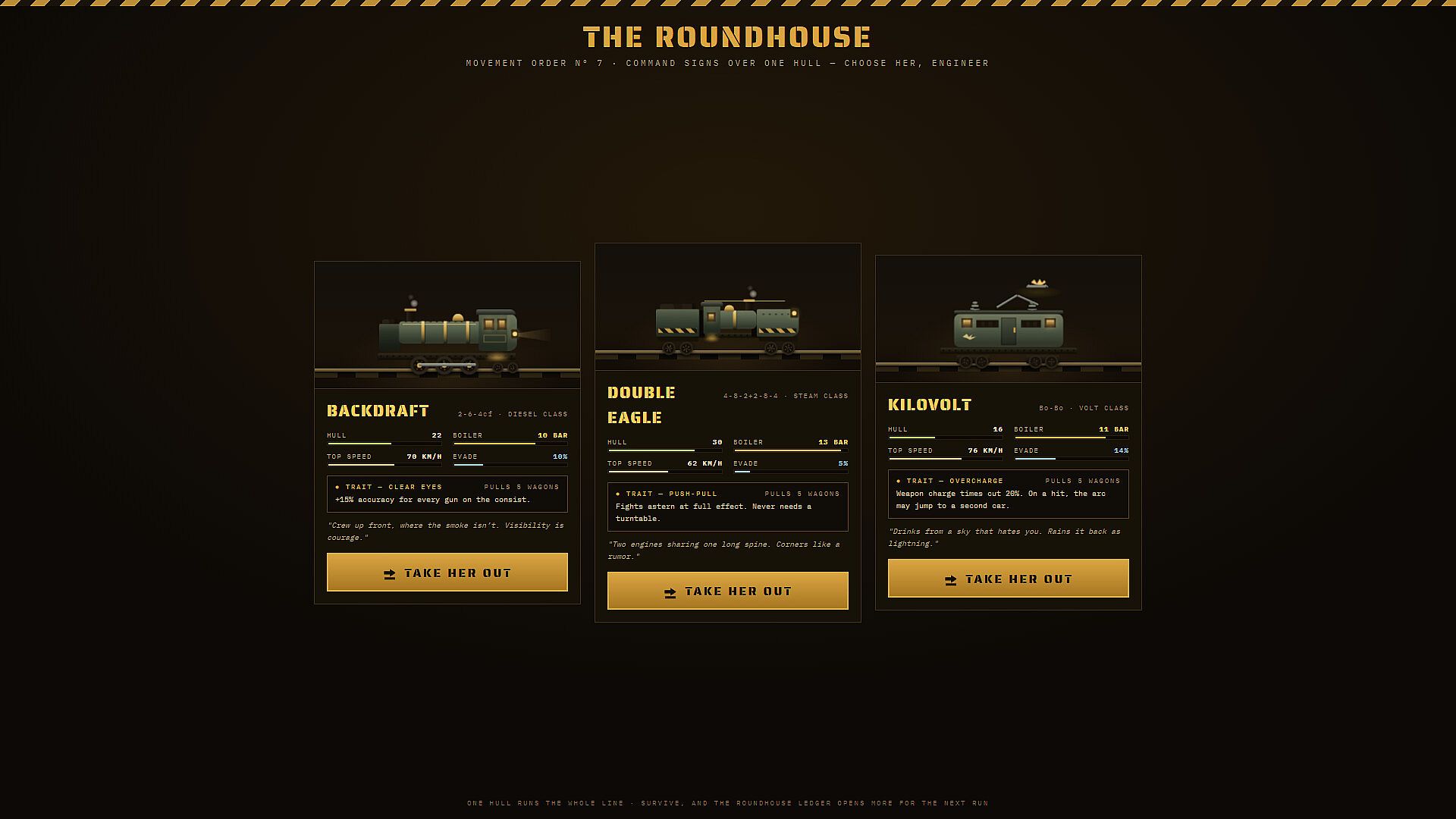
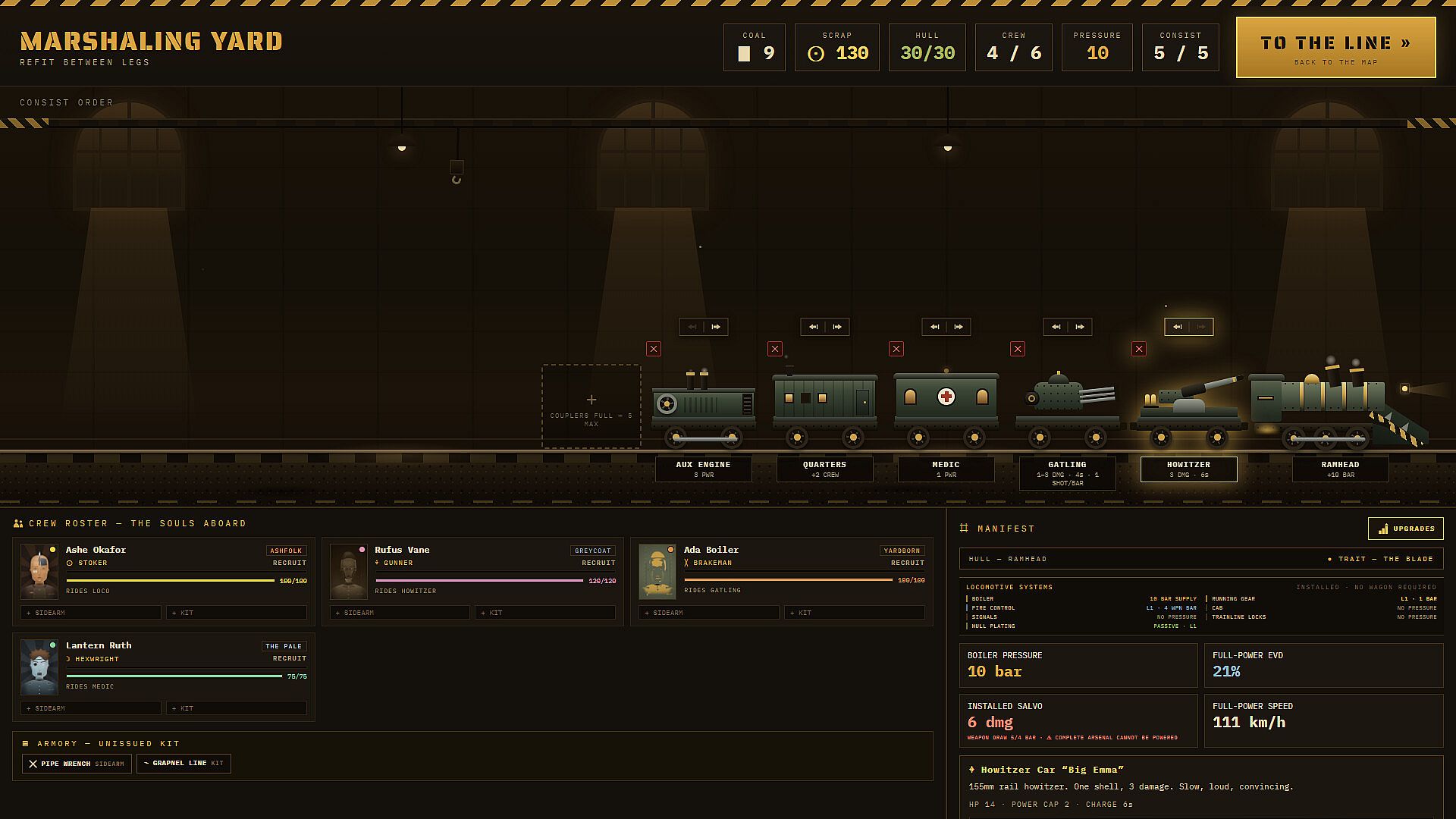
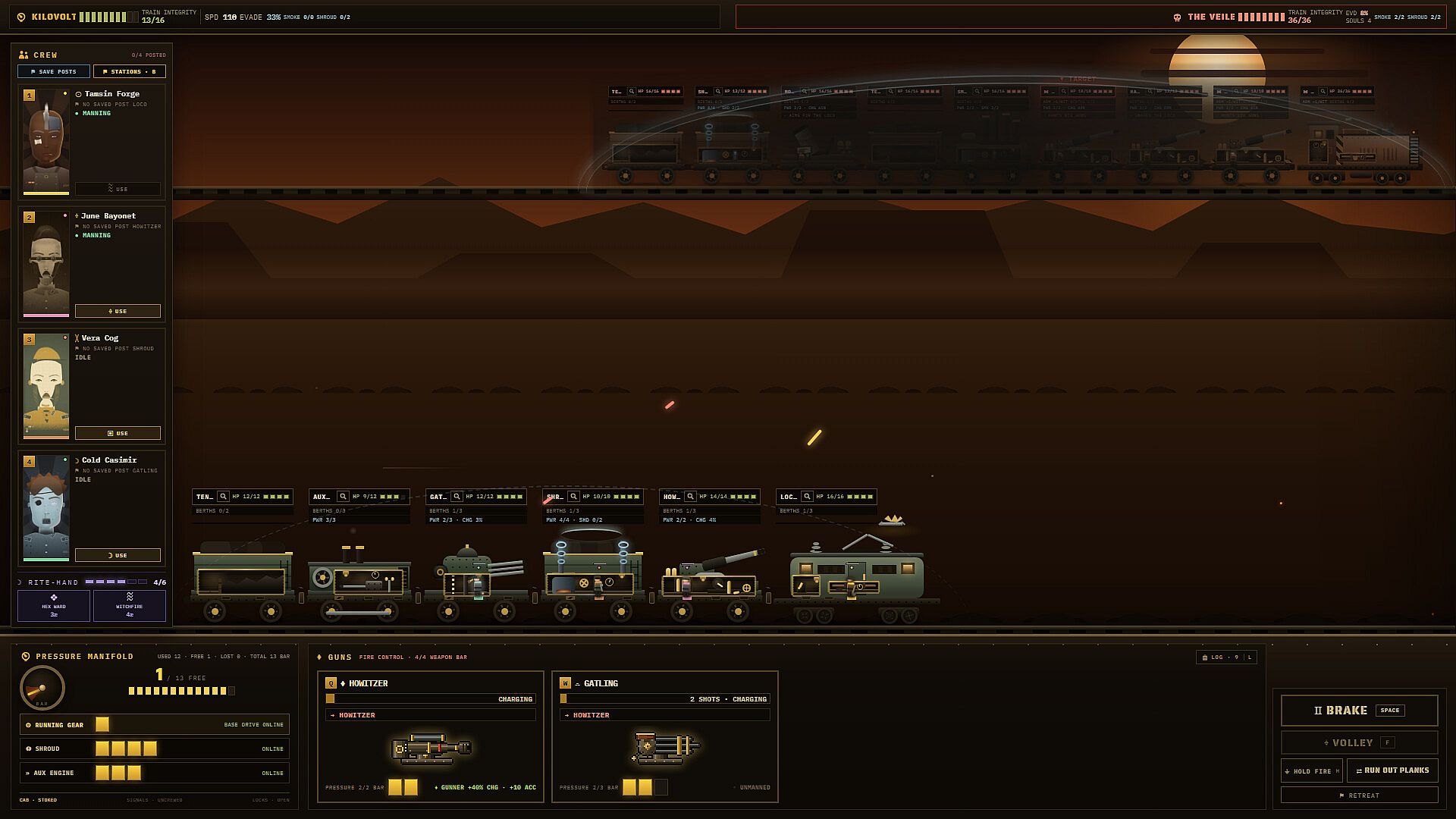
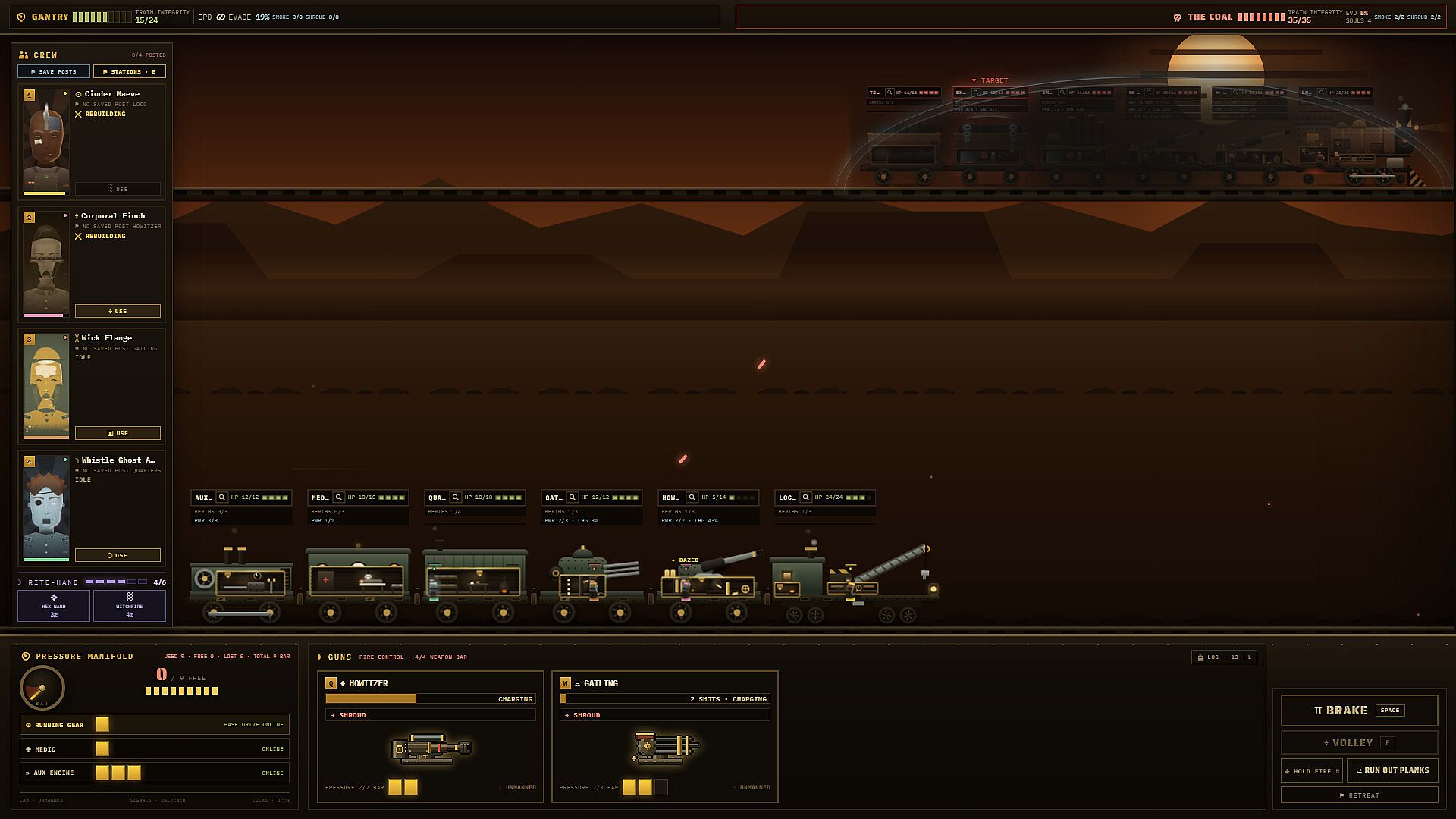
Il ciclo di gioco ruota attorno alla composizione del convoglio, formato da locomotive e vagoni agganciati che offrono capacità diverse per il combattimento e la sopravvivenza. Le locomotive variano da modelli orientati alla velocità a veri e propri forti corazzati, mentre i vagoni aggiungono armi come obici e lanciafiamme o sistemi di supporto quali vagoni medici e tender per il carbone. La pressione della caldaia è la risorsa condivisa che alimenta ogni sistema, obbligando a scelte continue su come distribuire potenza tra fuoco, velocità e difese durante gli scontri.
Le battaglie si svolgono in tempo reale ma possono essere messe in pausa per analizzare il treno nemico, scegliere i bersagli, ridistribuire la pressione, riposizionare l'equipaggio e attivare abilità prima di riprendere l'azione. Questo permette di coordinare con precisione raffiche, rimozione di cortine fumogene, traiettorie di mortaio, abbordaggi, spegnimento incendi e riparazioni mentre le ruote continuano a girare. I nemici sconfitti possono arrendersi offrendo un tributo o cedere rottami utili per potenziamenti e nuovi componenti.
La gestione dell'equipaggio aggiunge profondità: ogni membro ricopre ruoli specializzati come artiglieri, fuochisti, frenatori, chirurghi e predoni. I sopravvissuti accumulano esperienza e equipaggiamento tra una run e l'altra, con la possibilità di trascinare in salvo i feriti o di rianimarli con cure mediche. Un vagone per le sedute spiritiche genera etere dalla pressione della caldaia, alimentando abilità occulte come barriere, fuoco stregato, artiglieria spettrale e manipolazione delle anime che si integrano alle armi convenzionali.
Modalità di gioco
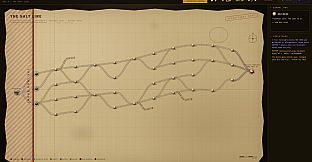
L'esperienza si concentra su una campagna roguelite in singolo giocatore articolata in tredici giorni di avanzata verso il treno comando nemico. I percorsi si diramano tra incontri casuali, depositi e fermate per le riparazioni, dove il consumo di carbone fa progredire sia il viaggio sia la minaccia dell'inseguitore. Ogni run richiede una configurazione diversa del treno a causa delle condizioni mutevoli e delle risorse limitate.
Obiettivi persistenti registrano i successi tra i tentativi e sbloccano nuove locomotive per le partenze successive. All'ultimo bivio è possibile scegliere tra un assalto frontale, una manovra ad alta velocità o un sabotaggio preventivo prima dello scontro decisivo.
Costruzione del treno e gestione delle risorse
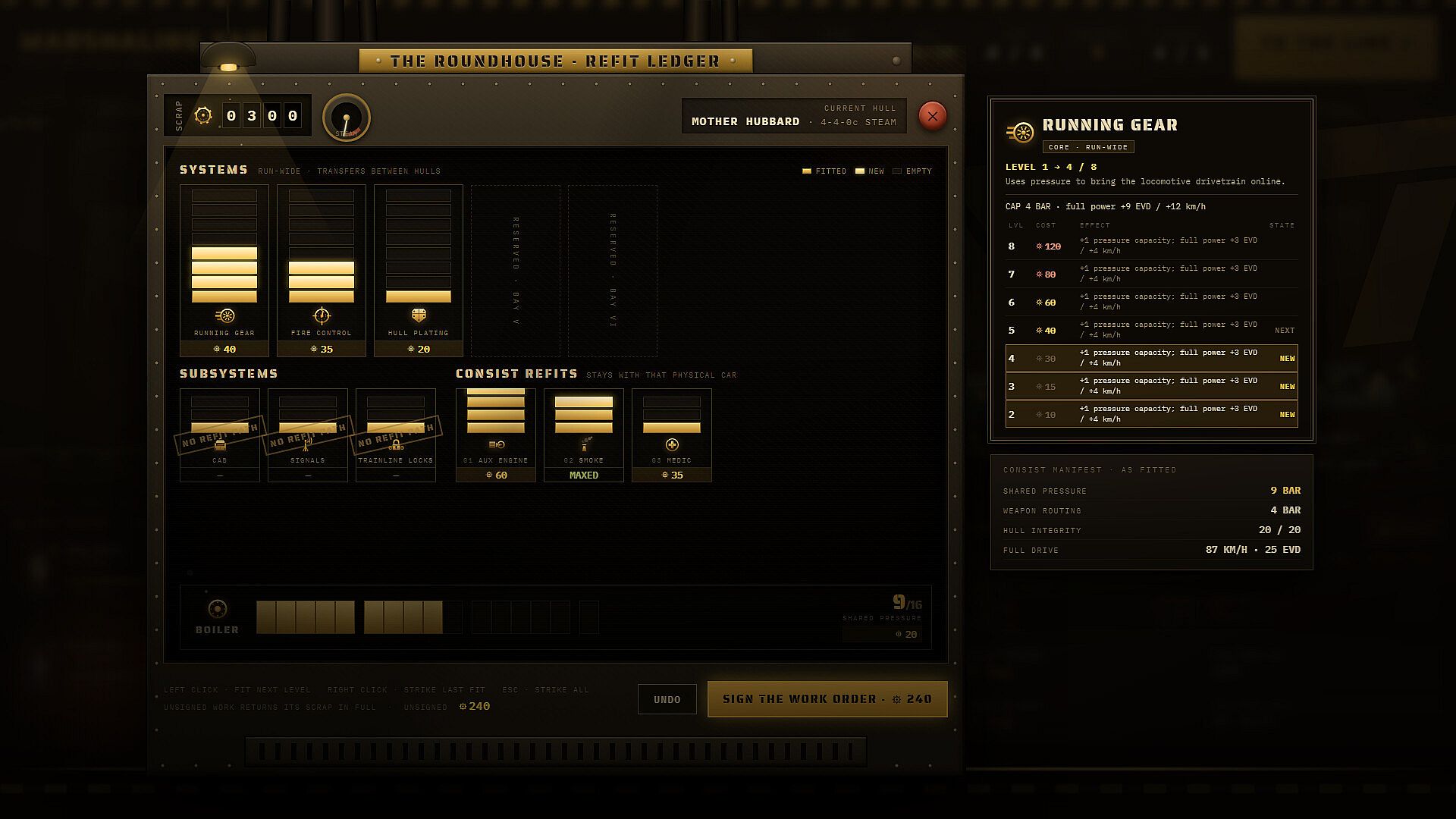
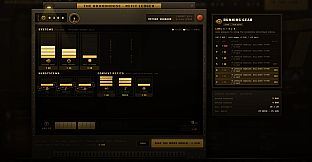
La costruzione si basa su compromessi, non sulla perfezione. Miglioramenti a scafo, caldaia, sistemi di tiro e carrelli competono con l'aggiunta di nuovi vagoni per rottami e carbone. Ogni elemento alimentato attinge dallo stesso serbatoio di pressione, quindi deviare potenza alle armi riduce quella disponibile per fuga o supporto. Motori ausiliari, scudi a vapore e macchinari occulti ampliano le possibilità ma aumentano la richiesta complessiva sulla scorta limitata.
I rottami recuperati dai relitti servono a finanziare carburante, riparazioni, reclutamenti e materiale rotabile. Percorsi più sicuri consumano meno carbone ma limitano il recupero, mentre itinerari rischiosi forniscono componenti di grande valore a costo di nemici più numerosi. L'assenza di una build universalmente ottimale invita a sperimentare combinazioni diverse di locomotive e vagoni a ogni tentativo.
Vale la pena giocarci?
Boiler & Blood è indicato per chi apprezza gli strategici metodici con rigiocabilità roguelite e una gestione dettagliata delle risorse. Il combattimento in tempo reale con pausa e i sistemi di equipaggio premiano pianificazione e adattamento, mentre il ciclo di costruzione del treno genera varietà significativa tra una run e l'altra. Chi è attratto dagli elementi di simulazione e dalle decisioni tattiche sotto pressione troverà i meccanici coinvolgenti, soprattutto nel bilanciare potenza offensiva e sopravvivenza a lungo termine in una campagna ostile. Il gioco è ancora in fase di sviluppo attivo e, con il suo focus sulla progressione in singolo, si adatta bene ai fan dei titoli indie strategici incentrati sui sistemi piuttosto che sullo spettacolo.