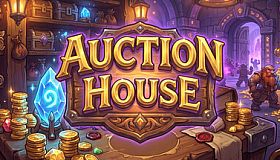


Auction House 2 is a single-player idle trading and crafting simulation that places players in charge of a growing fantasy economy. The game combines strategy, casual pacing, and simulation elements as players start with minimal resources and expand into a network of gatherers and crafters who supply an AI-driven auction house. Core loops revolve around resource collection, production chains, price setting, and reinvestment, all while managing offline progress and responding to market shifts.
Gameplay
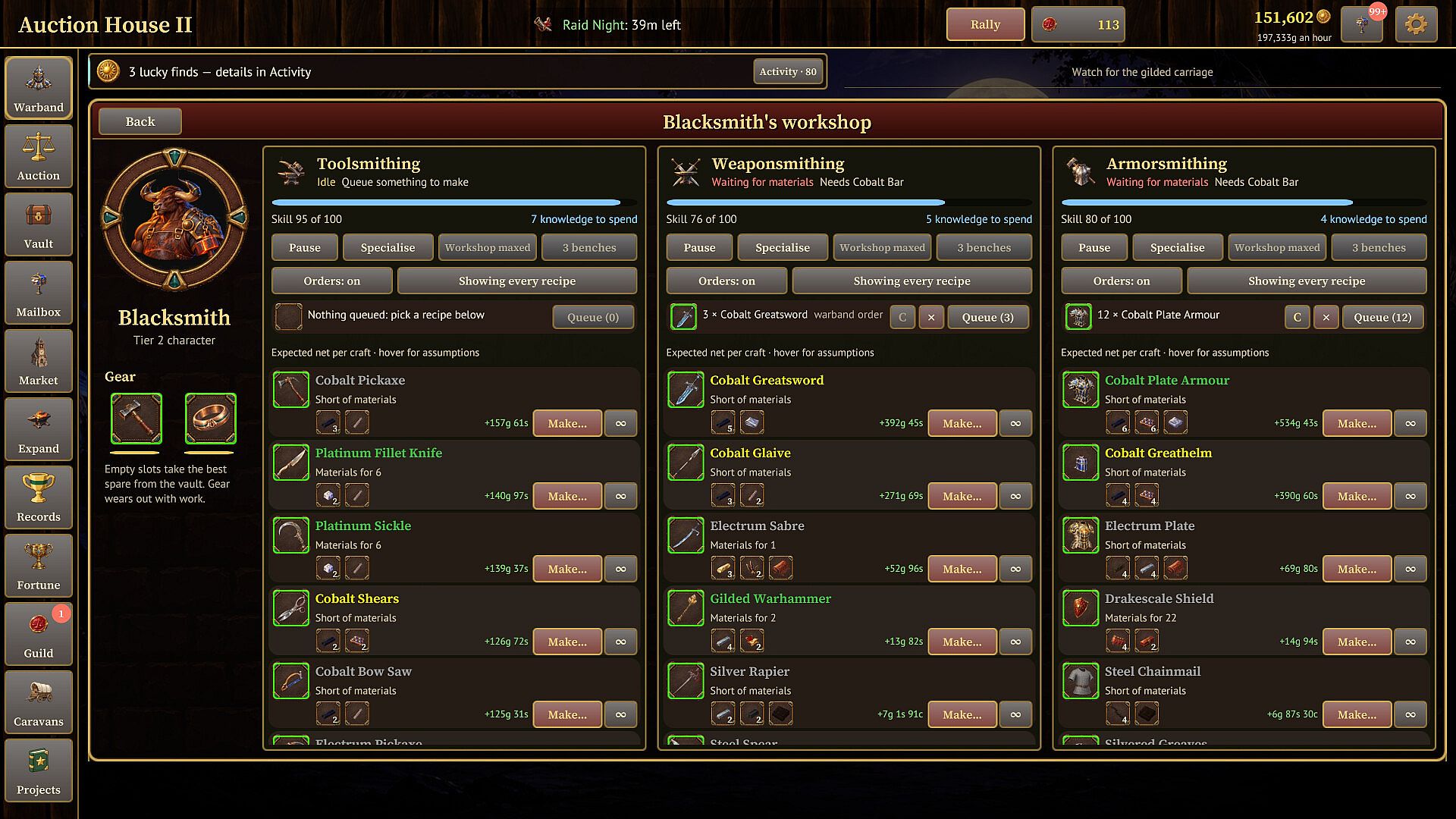
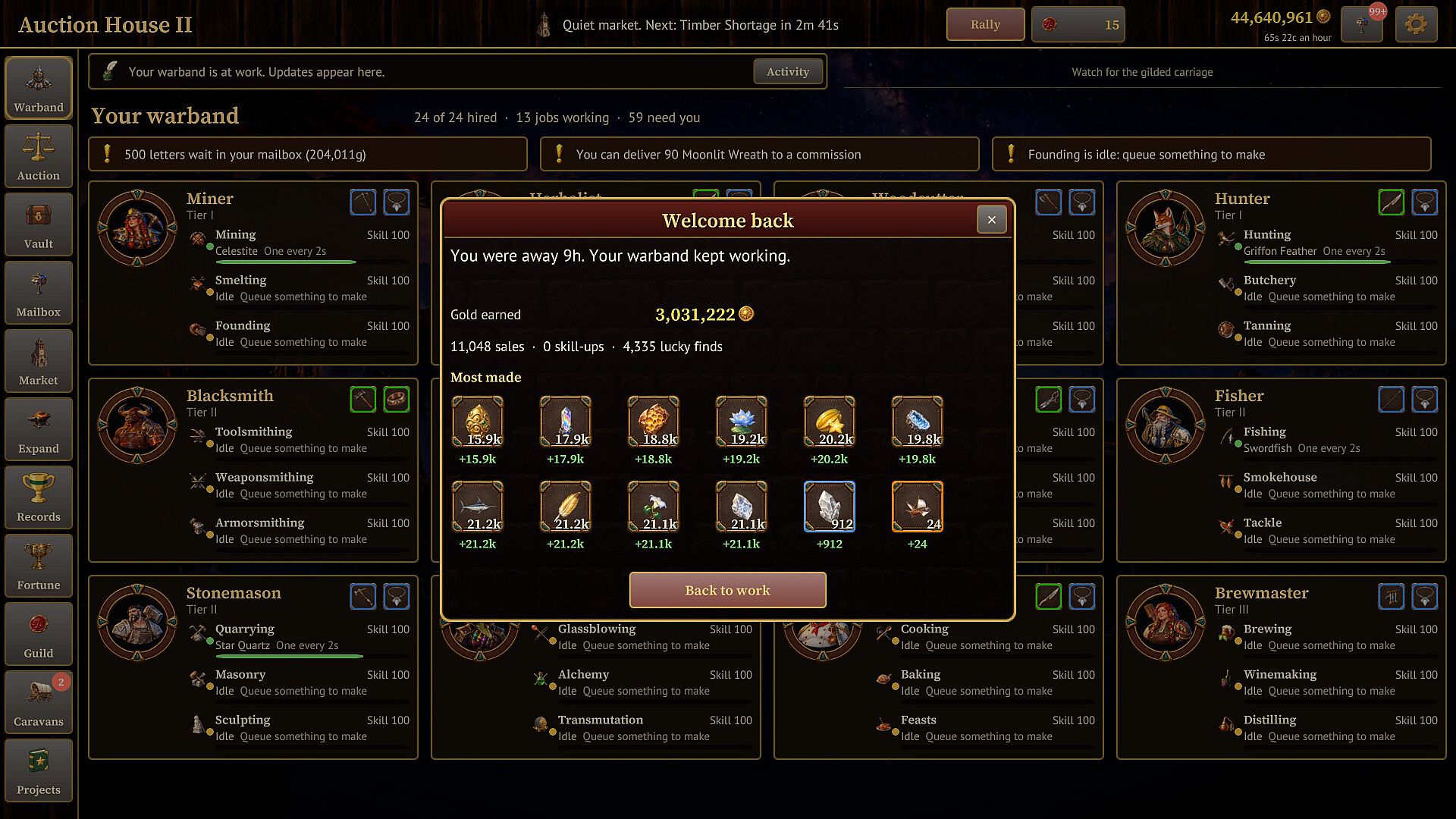
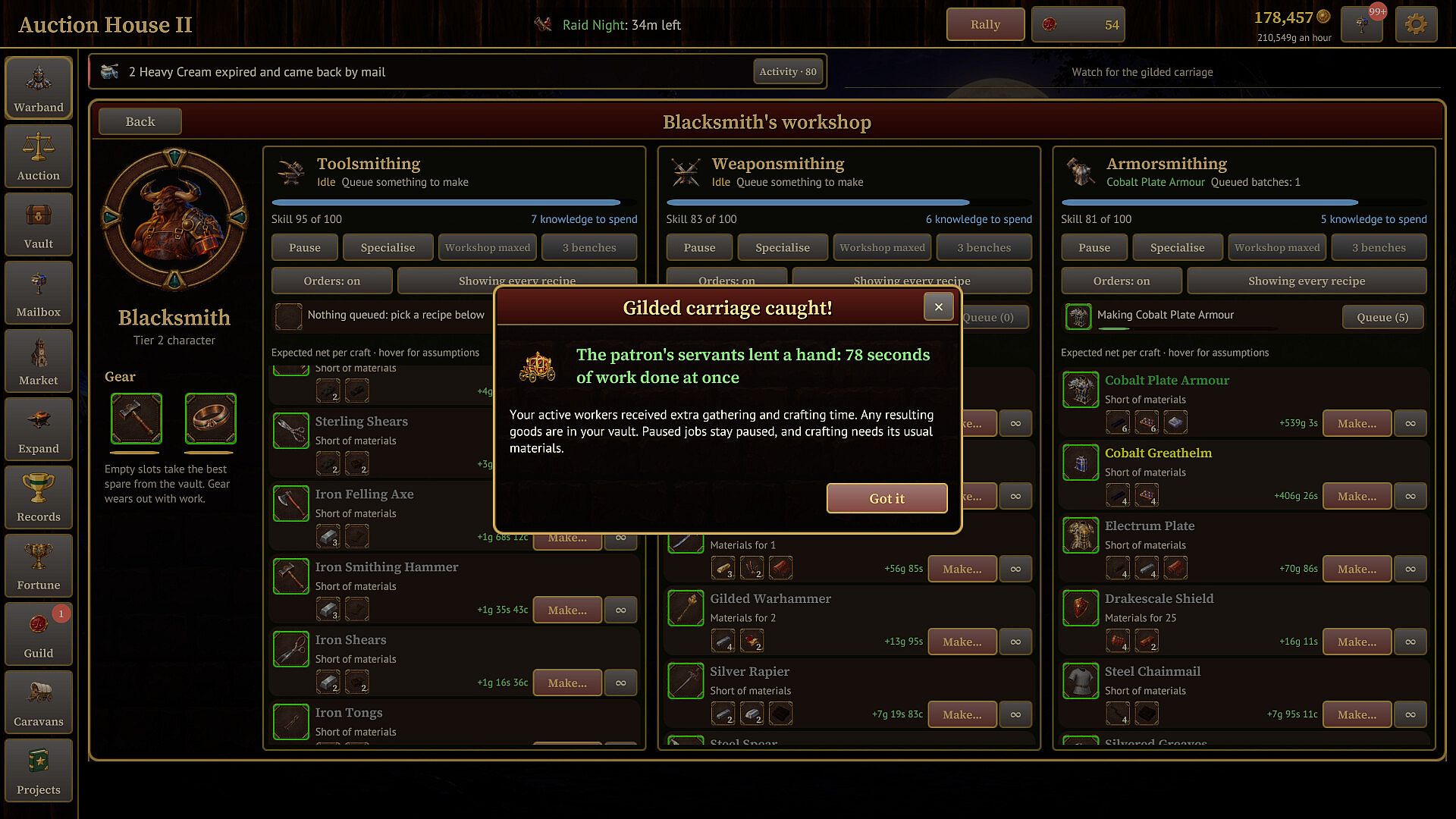
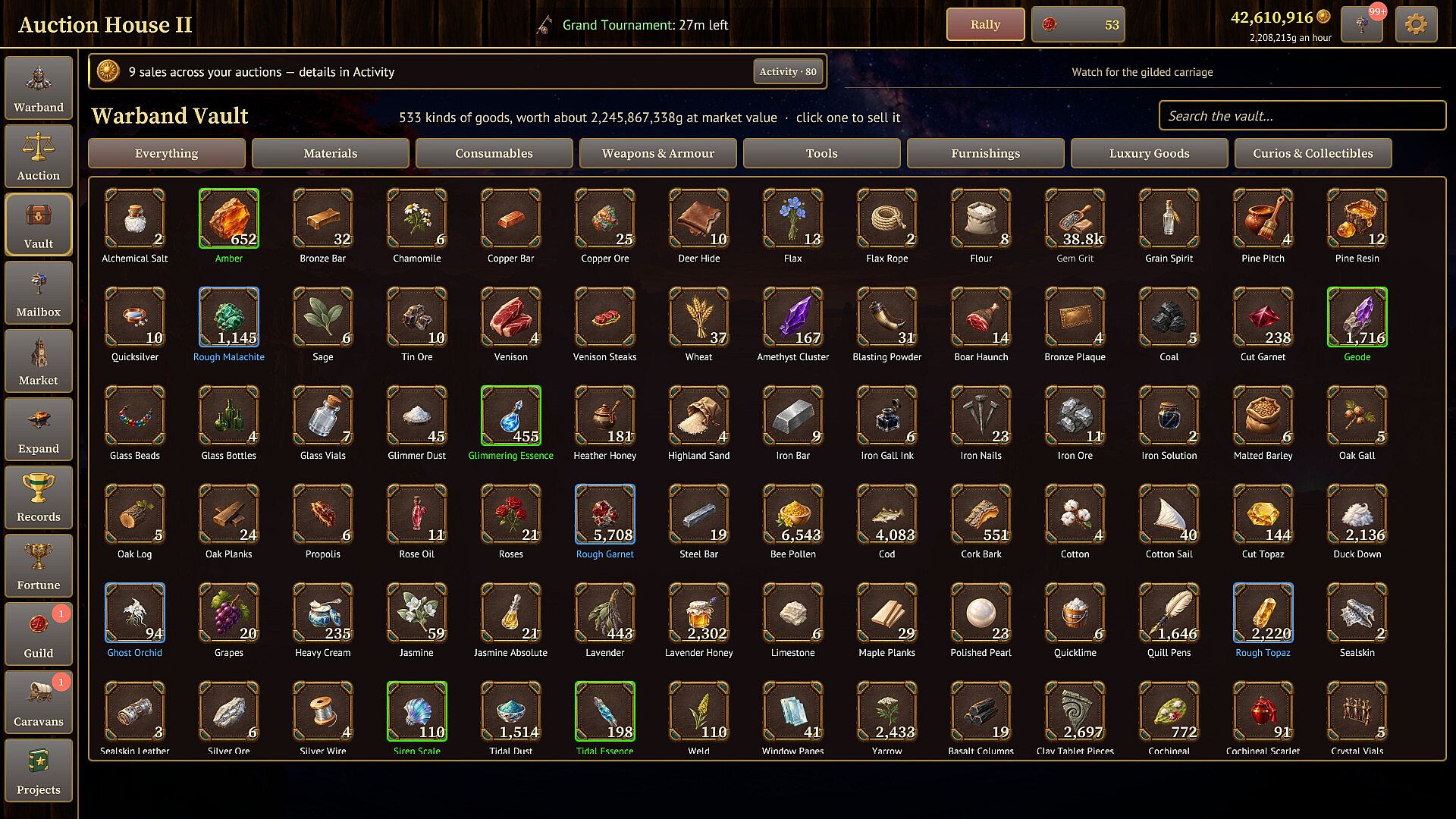
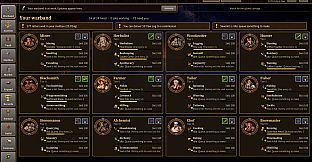
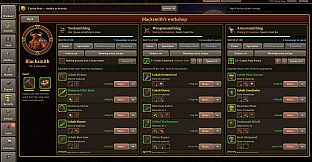
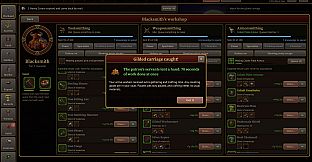
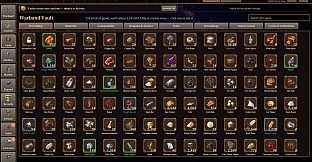
Players begin with a single miner and basic copper ore. From there, the focus shifts to recruiting additional characters and assigning professions to create efficient production chains. Ore, herbs, and timber feed into crafting queues that turn raw materials into finished goods. A shared vault ensures that output from one workshop directly supports the next stage of production without manual transfers.
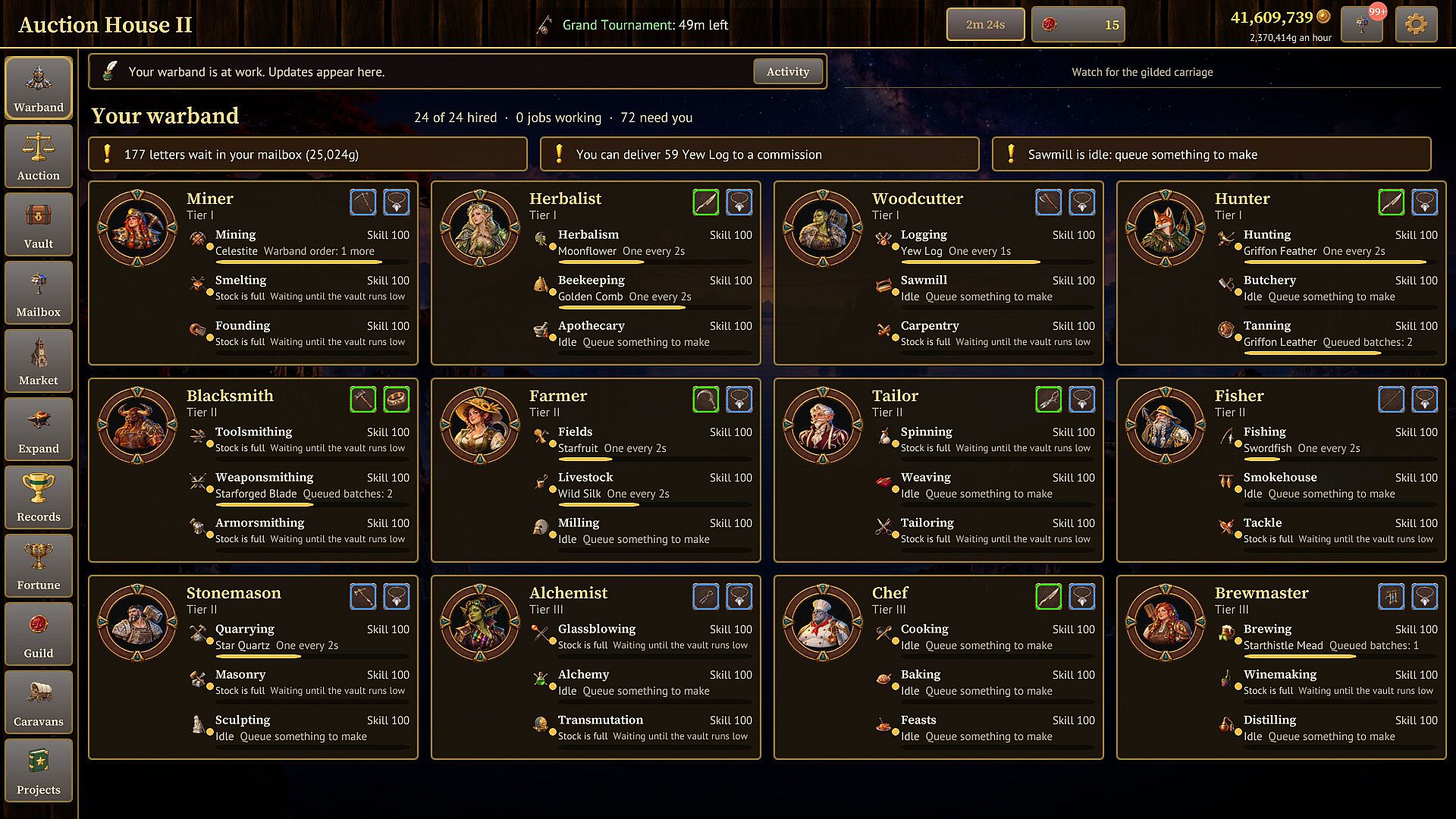
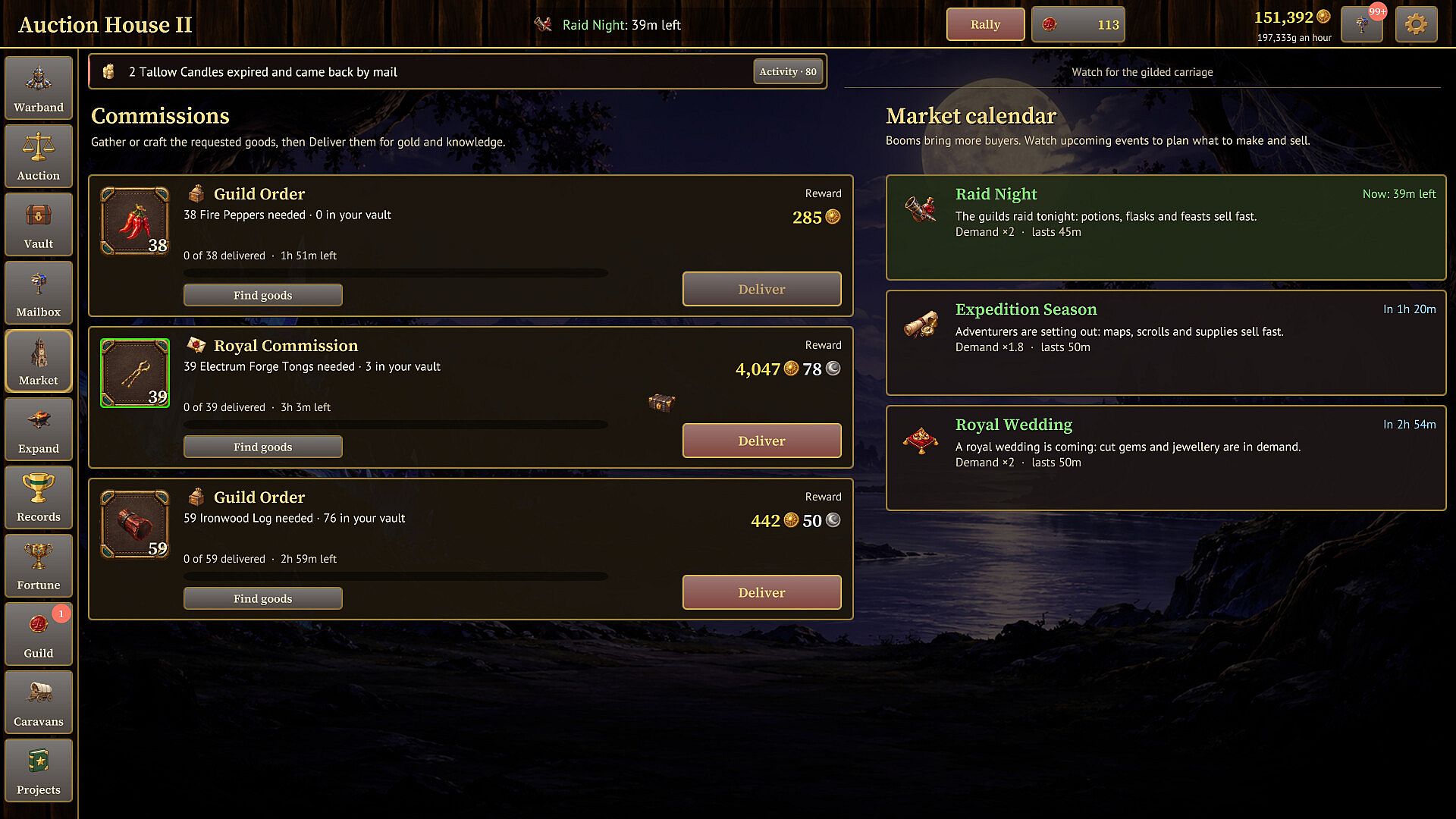
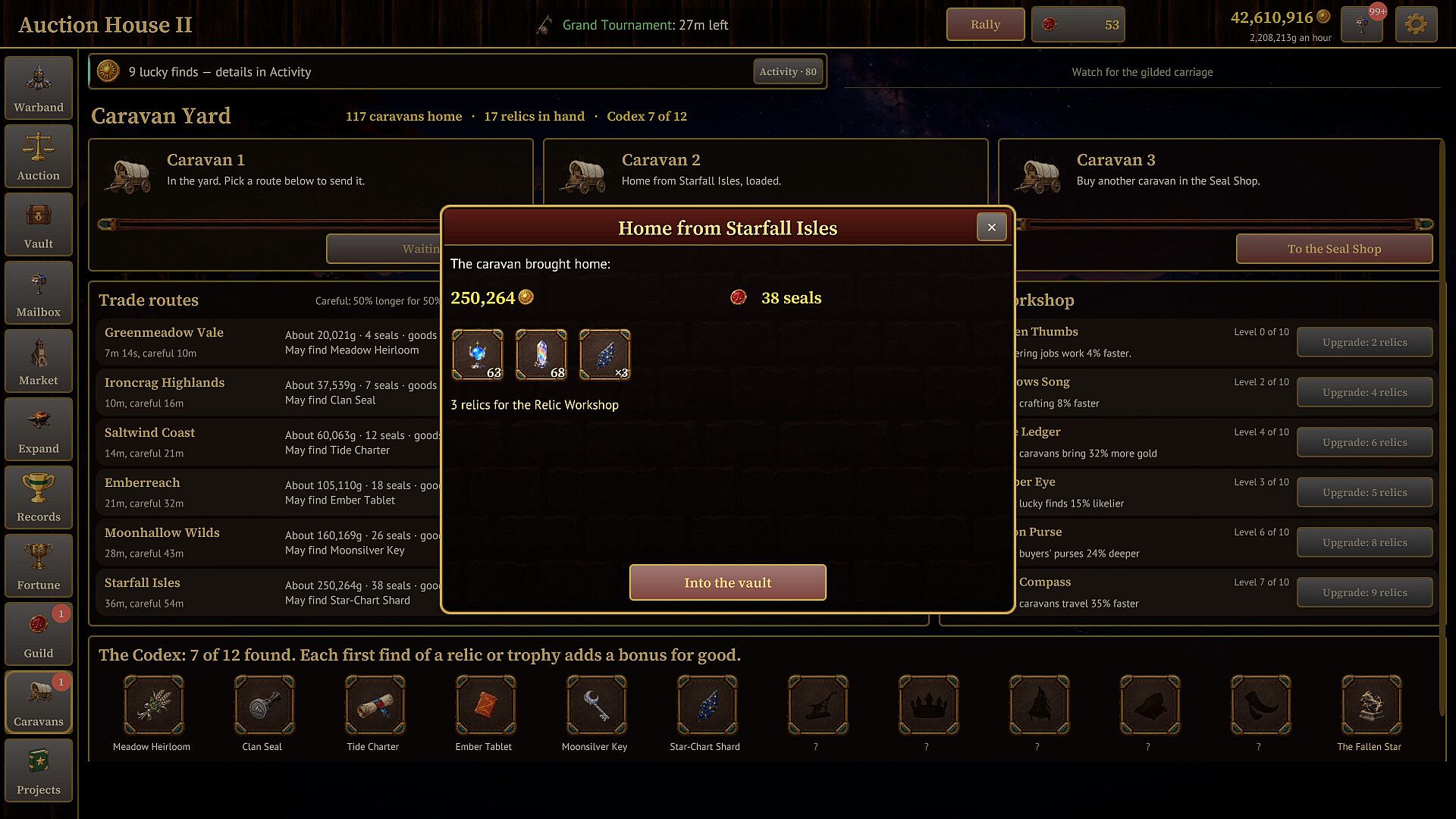
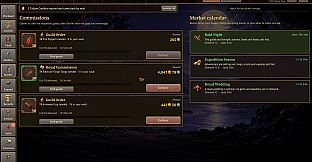
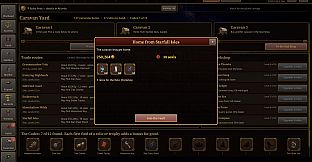
Development involves improving worker skills, equipment, and specializations across 24 characters and 72 professions spread over six regions. Rare patterns appear through play, opening new crafting options and regional expansion. Commissions provide directed goals, while caravans handle longer trading journeys that return with profits or resources. Auctioneer helpers automate routine tasks such as mail collection and relisting items, allowing the business to advance even when the player is away.
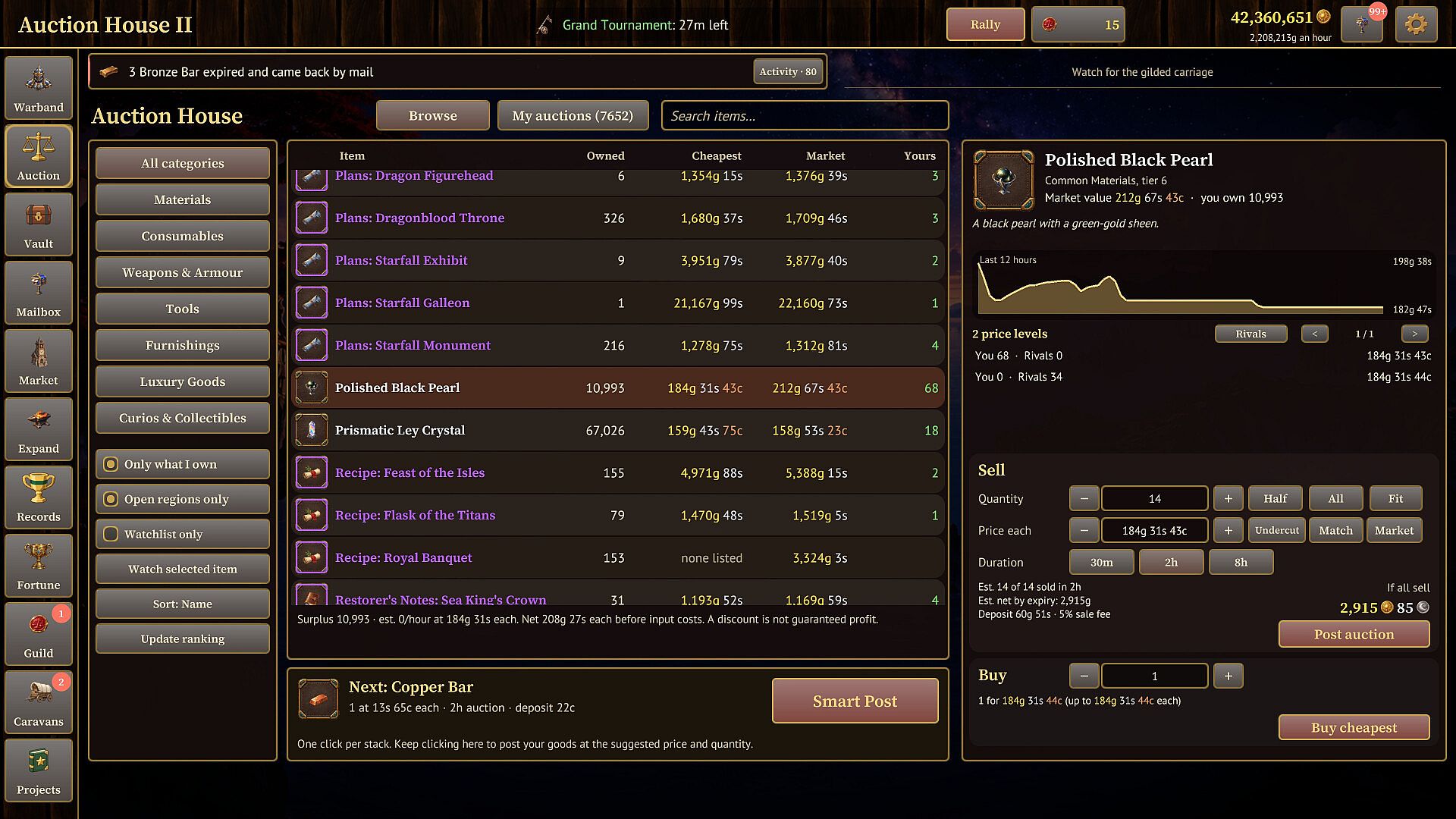
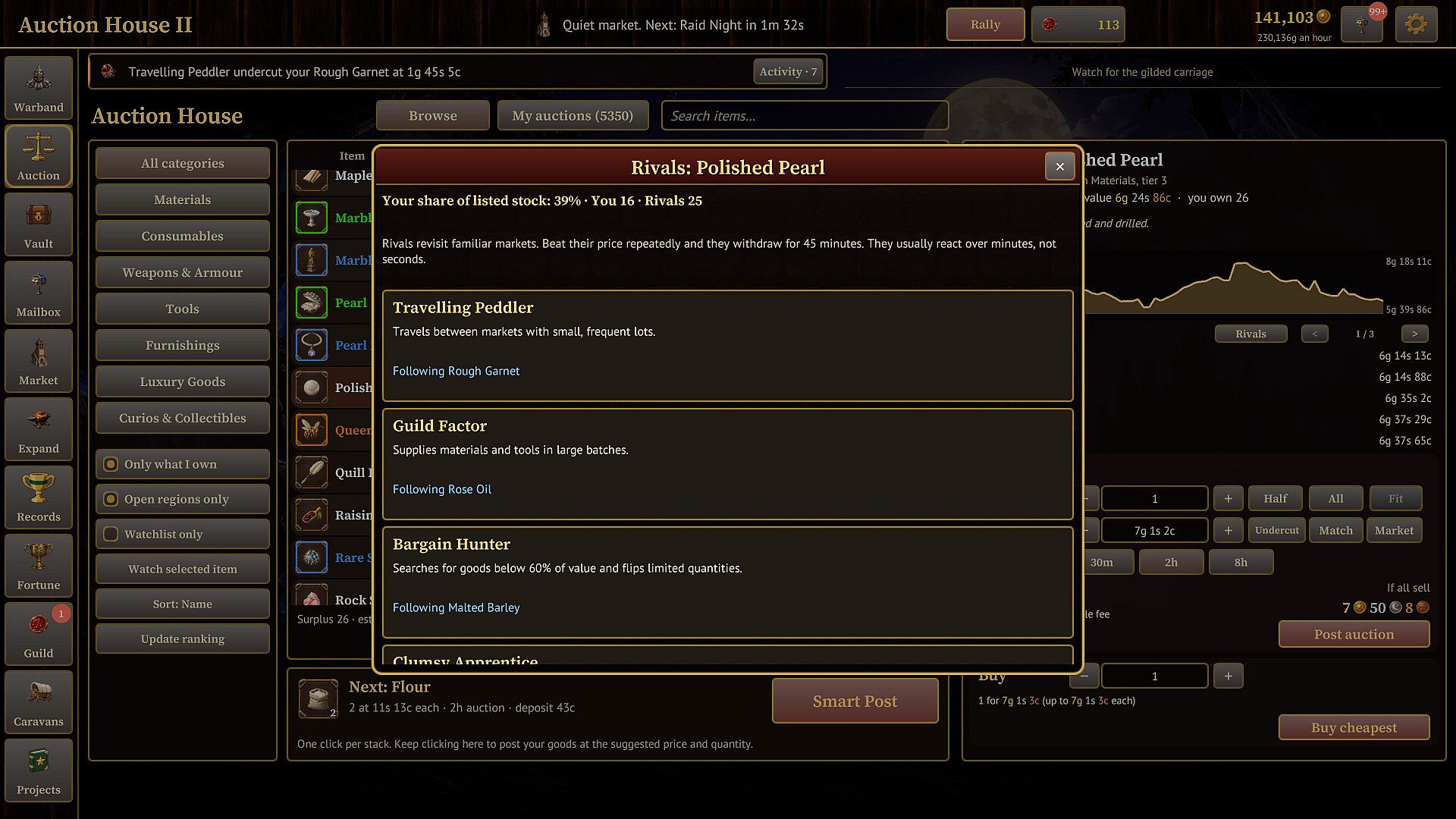
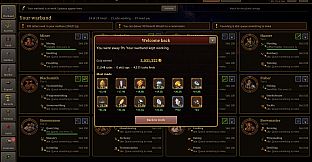
Market decisions center on choosing inventory, setting prices, and monitoring demand. Quick sales yield smaller returns, while holding items can capture higher profits when conditions favor it. Proceeds arrive via mailbox and fund further growth. The system supports idle advancement, with background gathering and crafting continuing between sessions.
Game Modes
Auction House 2 functions entirely as a single-player experience. There are no separate competitive or cooperative modes. All activity occurs within one persistent world where rival merchants operate as part of the simulated economy rather than as human opponents. Progression follows a linear yet flexible path of character unlocks, profession development, and market expansion that players advance at their own speed.
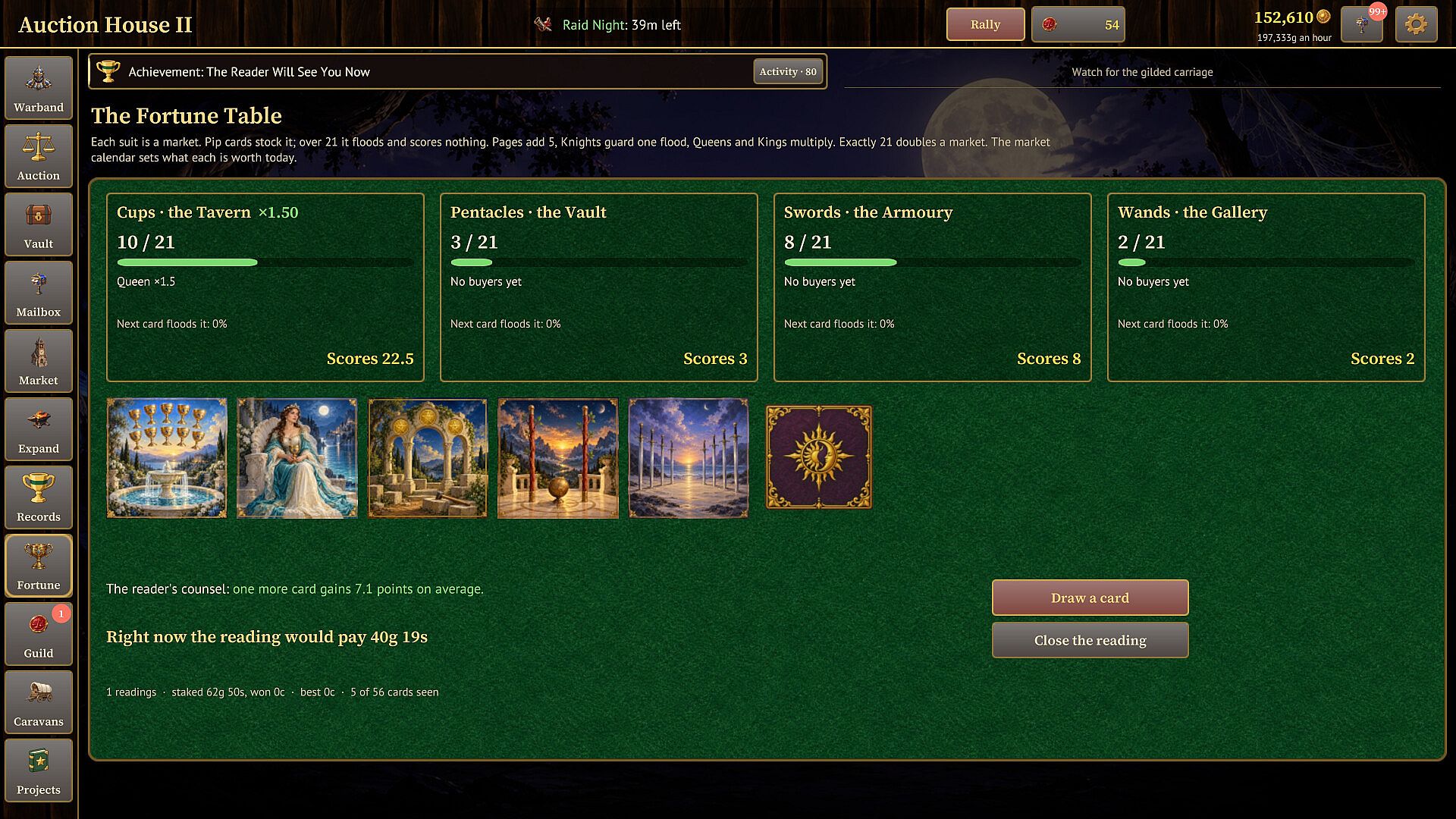
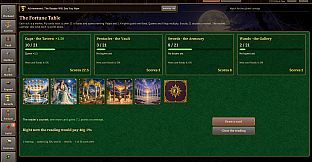
Core systems include gathering, crafting queues, price management, and mail handling. Later updates introduced additional layers such as a guild hall for character management, a speculation market with charts and events, and a casino hub offering games like blackjack and poker. These elements integrate into the main loop without creating distinct modes, instead extending the existing economy simulation.
Market Dynamics and Progression
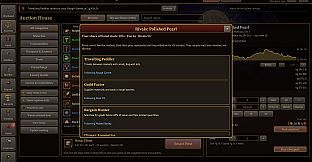
The auction house itself reacts to simulated supply, demand, and world events. Prices fluctuate, creating opportunities to buy low or sell high. Multicraft procs during gathering and crafting can multiply output, adding variability and reward to repeated actions. Bulk trading options and mail automation streamline larger operations once the roster grows.
Unlock order for characters follows a structured sequence that requires developing earlier professions before accessing later ones, such as reaching the mage as a finale. Upgrade costs scale to maintain long-term engagement, and new recipes expand crafting depth over time. Background optimization ensures the game continues running efficiently during extended idle periods.
Is It Worth Playing?
Auction House 2 suits players who enjoy idle economy builders and crafting simulations with strategic pricing decisions. The single-player focus allows uninterrupted pacing without external competition or time pressure from other users. Recent patches have addressed progression speed, added content such as expanded recipes and new management tabs, and improved quality-of-life features like bulk actions and account-wide mail.
Reception on Steam shows mixed results from a small review sample, with some players noting satisfying long-term growth and others finding the early pace or specific mechanics less engaging. The game remains actively supported with updates that refine balance and introduce new systems. Those drawn to casual strategy titles centered on resource chains and market timing will find the most consistent appeal, while players seeking fast action or multiplayer interaction may prefer alternatives.