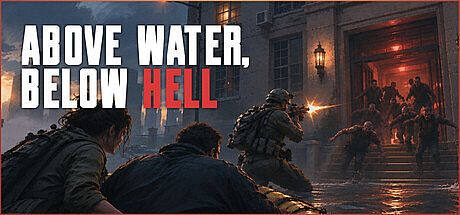


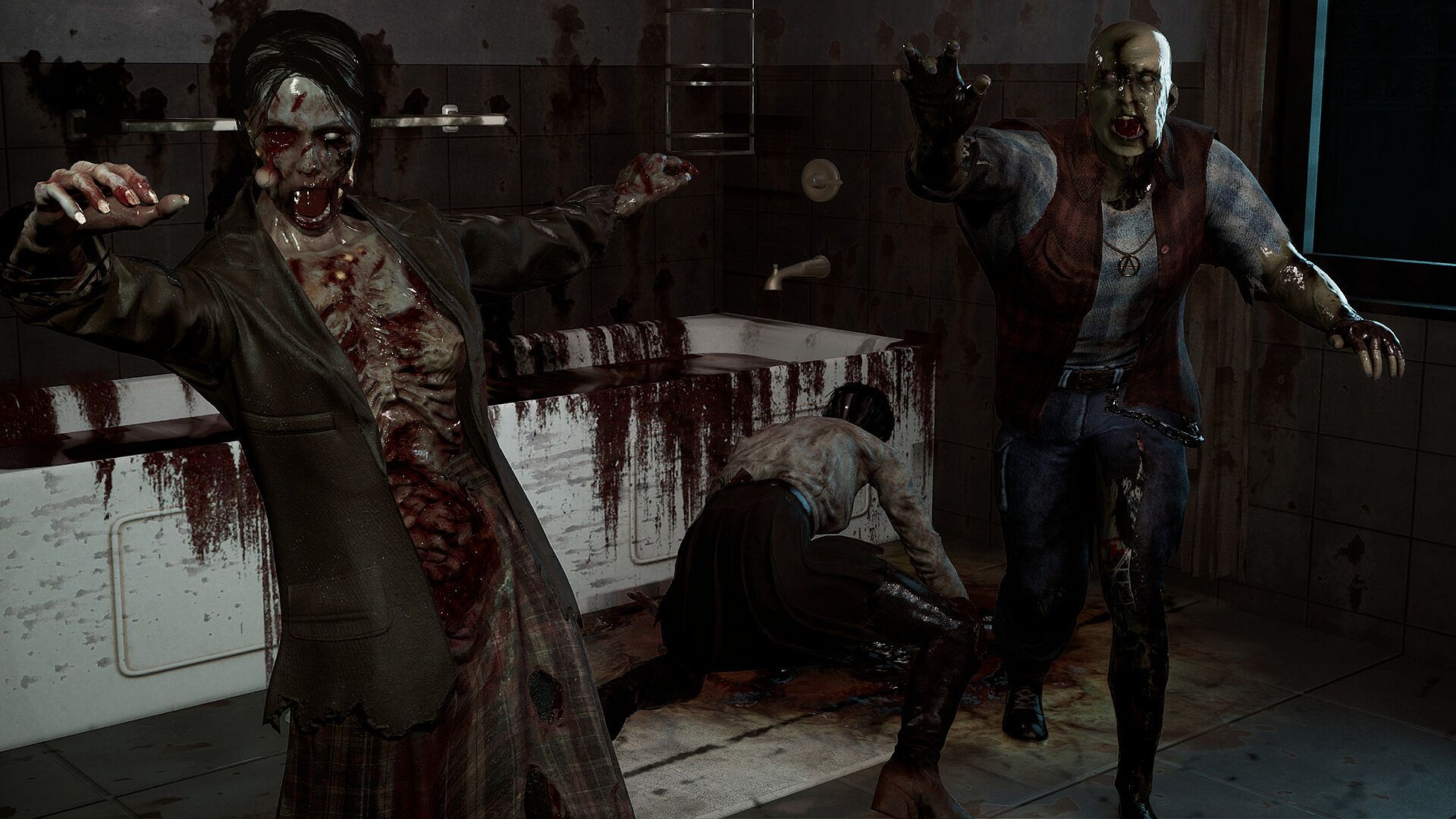
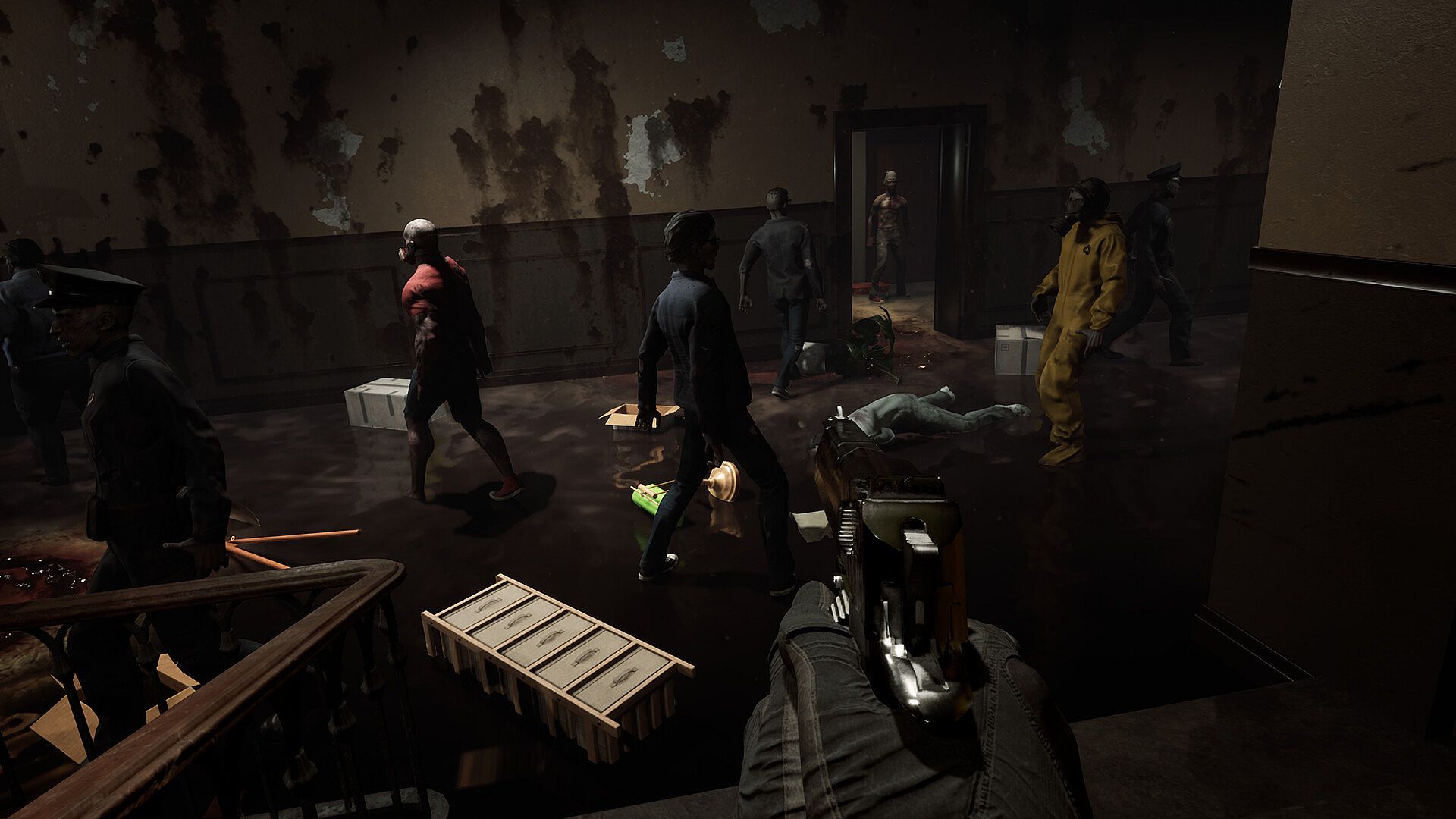
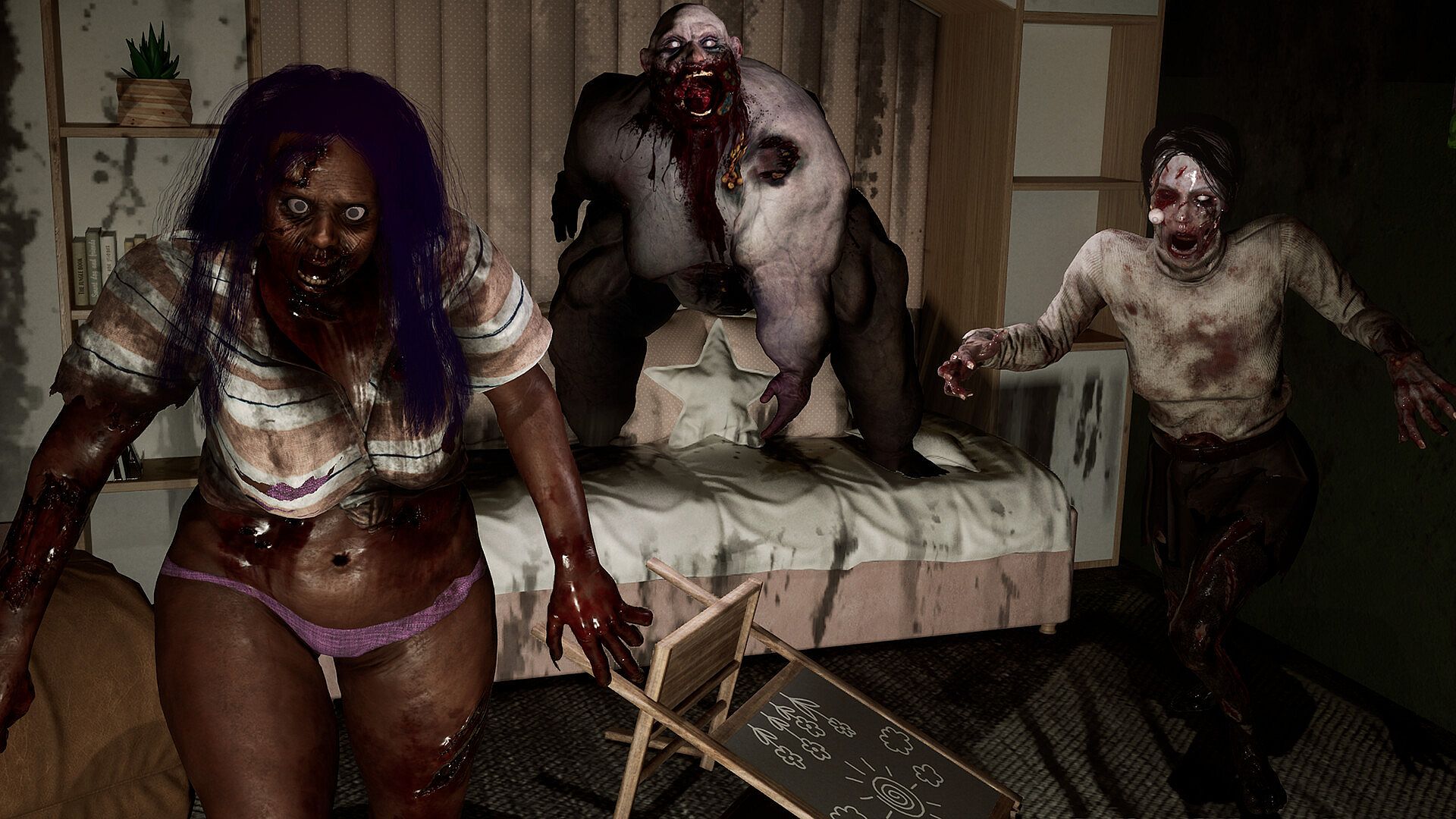
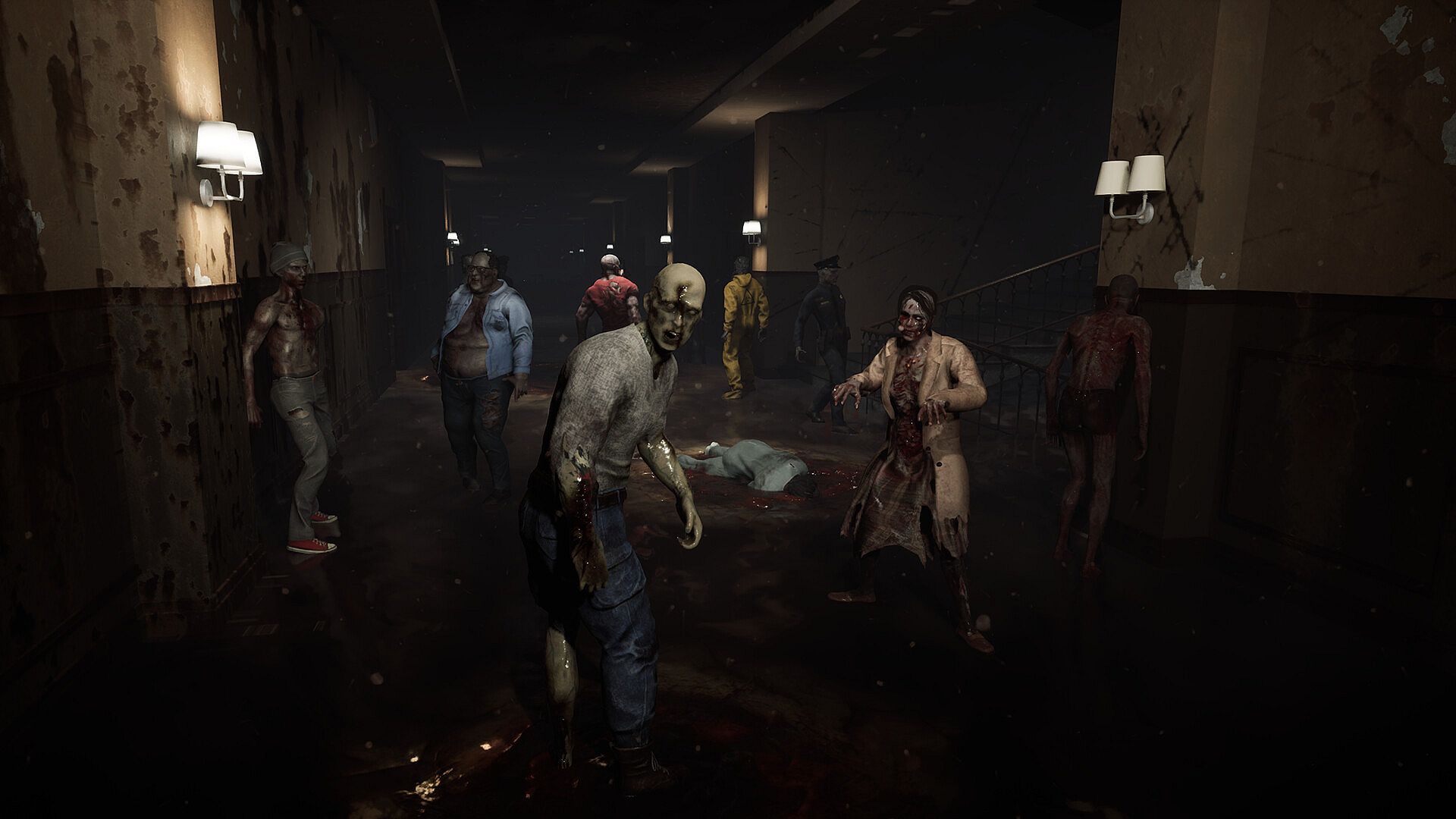
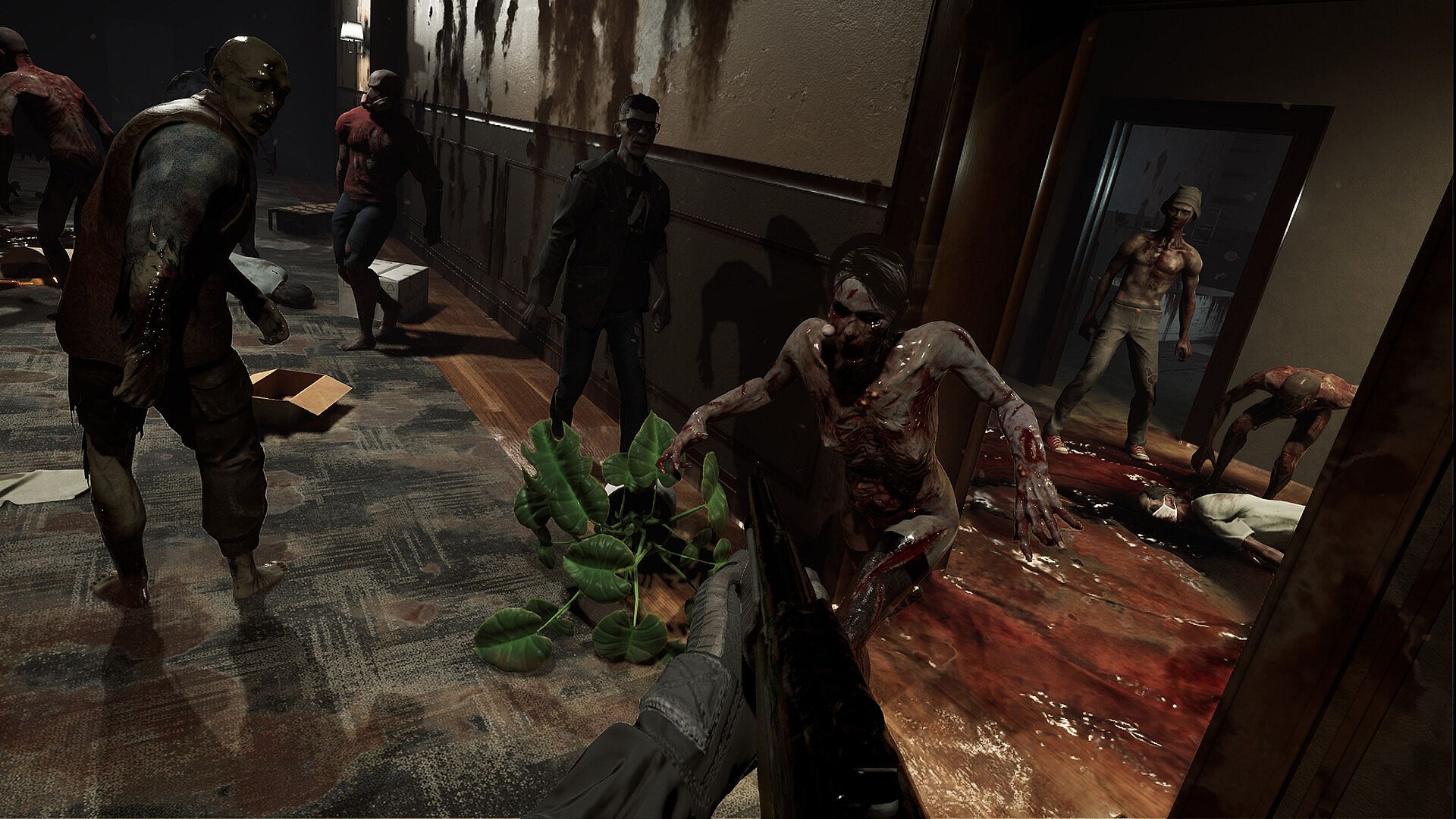
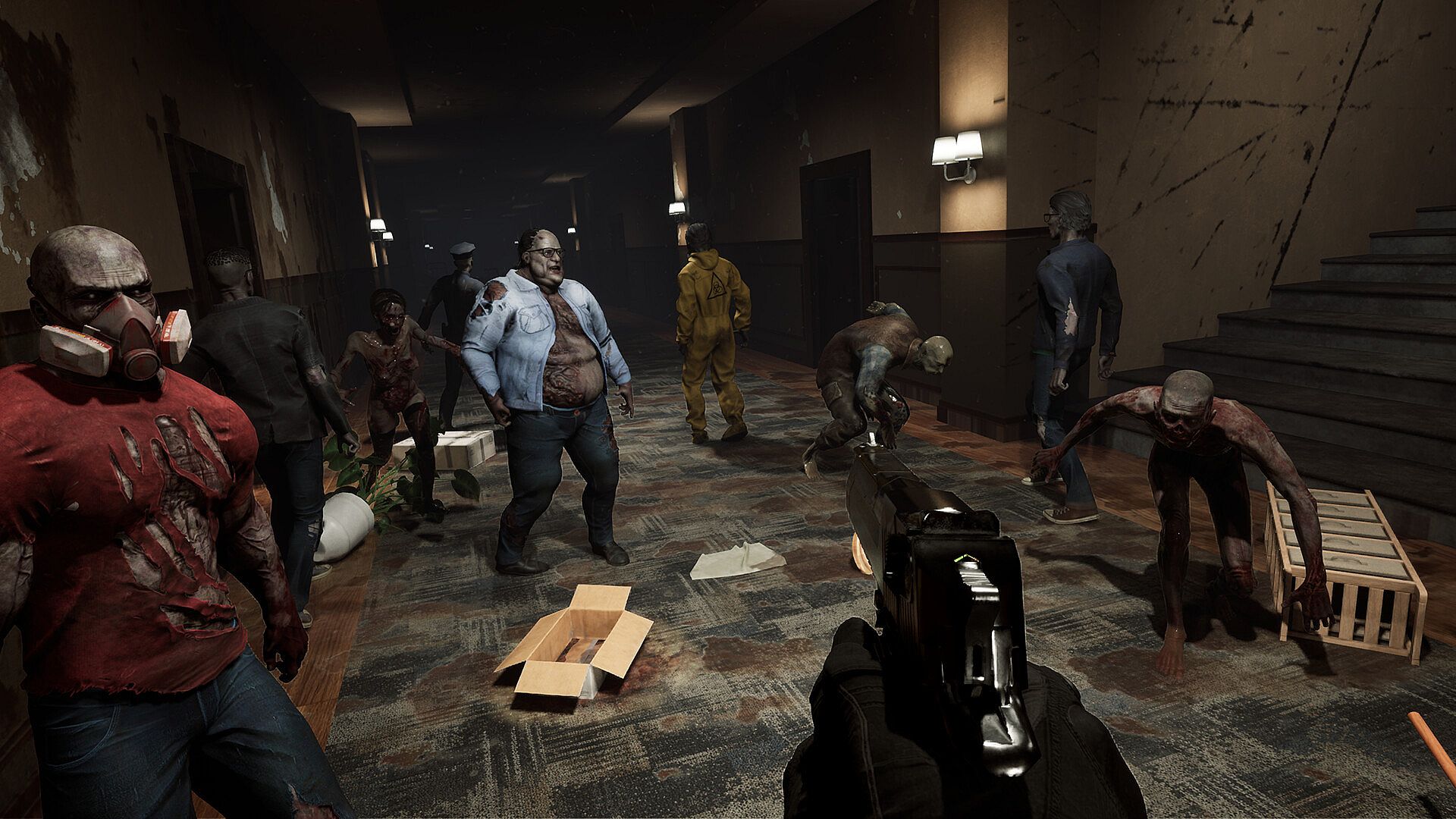


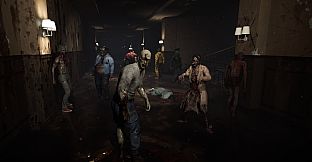
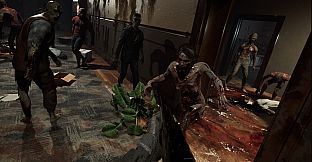
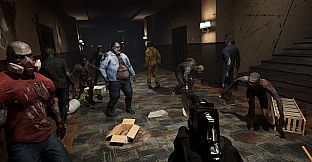
Above Water, Below Hell is a first-person horror shooter that blends tense survivor management with close-quarters combat in a flooded, zombie-infested high-rise. Set in a bombed-out Chicago where rising waters have trapped people in damaged skyscrapers, the game casts players as Hank, a former cop returning to rescue survivors two years after an outbreak began. Immunity to the virus puts the burden of screening and selection squarely on the player, turning every floor cleared and every group escorted into a high-stakes calculation of risk and responsibility.
Gameplay
The core loop revolves around methodical floor-by-floor exploration of a shattered high-rise. Players arrive by boat and must locate living people amid the dead, using specialized inspection tools to record symptoms and track changes over time. Each survivor undergoes examination at designated points, with new symptoms potentially revealing infection that earlier checks missed. Decisions about who joins the group carry permanent weight, because a single oversight can lead to a sudden turn that endangers everyone nearby.
Escort limits force careful planning. Only a small number of survivors can be moved at once, so players designate safe waiting areas and make repeated trips. Zombies prioritize the trailing group during attacks, triggering panic that halts progress until the threat is eliminated. Barriers can be repaired with scavenged materials to secure routes, while weapons and tools gathered on prior runs improve the odds for the next group. Experience gained from successful extractions upgrades weapon handling, accuracy, recoil control, and reload speed, along with new firearm and melee options.
Scavenging plays a central role in preparation. Building materials, inspection equipment, and firearms are scattered throughout the structure, rewarding thorough searches that pay off on subsequent visits. The first-person perspective keeps combat intimate, emphasizing positioning and quick reactions in narrow corridors and flooded rooms where the dead can appear from any angle.
Game Modes
The experience centers on a single-player rescue operation structured around multiple excursions into the same building. Each run involves clearing floors, performing inspections, organizing groups, and guiding survivors toward evacuation points on fire escapes or rooftops. Repeated trips allow players to apply lessons from earlier attempts, such as better barrier placement or more accurate symptom tracking, while the limited escort capacity creates natural replayability through different survivor selections and routing choices.
Progression ties directly to these repeated efforts. Equipment found or upgraded on one trip carries forward to support later groups, and the need to prevent any infected individual from reaching the evacuation zone adds an overarching constraint that shapes every decision. There are no separate competitive or cooperative modes; the focus remains on managing the tension between speed, caution, and the moral weight of leaving people behind or risking the group.
Core Mechanics and Progression
Inspection tools form the backbone of risk assessment. Players log symptoms across multiple checks, comparing records to spot inconsistencies that signal infection. A missed case can turn a rescue into a disaster when a survivor transforms mid-evacuation, while overly cautious choices may condemn healthy individuals to isolation or worse. The limited group size encourages strategic use of waiting zones, forcing players to balance immediate extractions against the safety of those left behind.
Combat integrates with evacuation pressure. When zombies attack the trailing survivors, the entire group stops moving until the threat is cleared. This creates moments where players must prioritize targets while protecting the vulnerable, then resume the slow advance. Scavenged resources support both offense and defense, letting players reinforce chokepoints before bringing larger groups through dangerous sections.
Upgrades reward consistent performance across multiple runs. Improved handling and new abilities make later trips smoother, but the core challenge of symptom tracking and group management persists. The building itself changes little between visits, so knowledge of layouts and hazard locations becomes a key advantage earned through persistence.
Is It Worth Playing?
Above Water, Below Hell suits players who enjoy deliberate, decision-heavy horror experiences that combine shooting with resource and personnel management. The emphasis on repeated rescue runs and infection screening creates a distinct loop focused on consequence and preparation rather than pure action or exploration. Those drawn to first-person shooters with survival elements and moral weight in choices will find the systems align closely with that interest.
The game remains in active development on PC, with its core mechanics centered on single-player progression through the high-rise. Without widespread release data or aggregated player feedback available, the recommendation rests on how well the described inspection, combat, and escort systems match individual preferences for tense, replayable rescue scenarios. Fans of methodical horror shooters that reward planning and adaptation across multiple attempts are the most likely to appreciate the structure.