


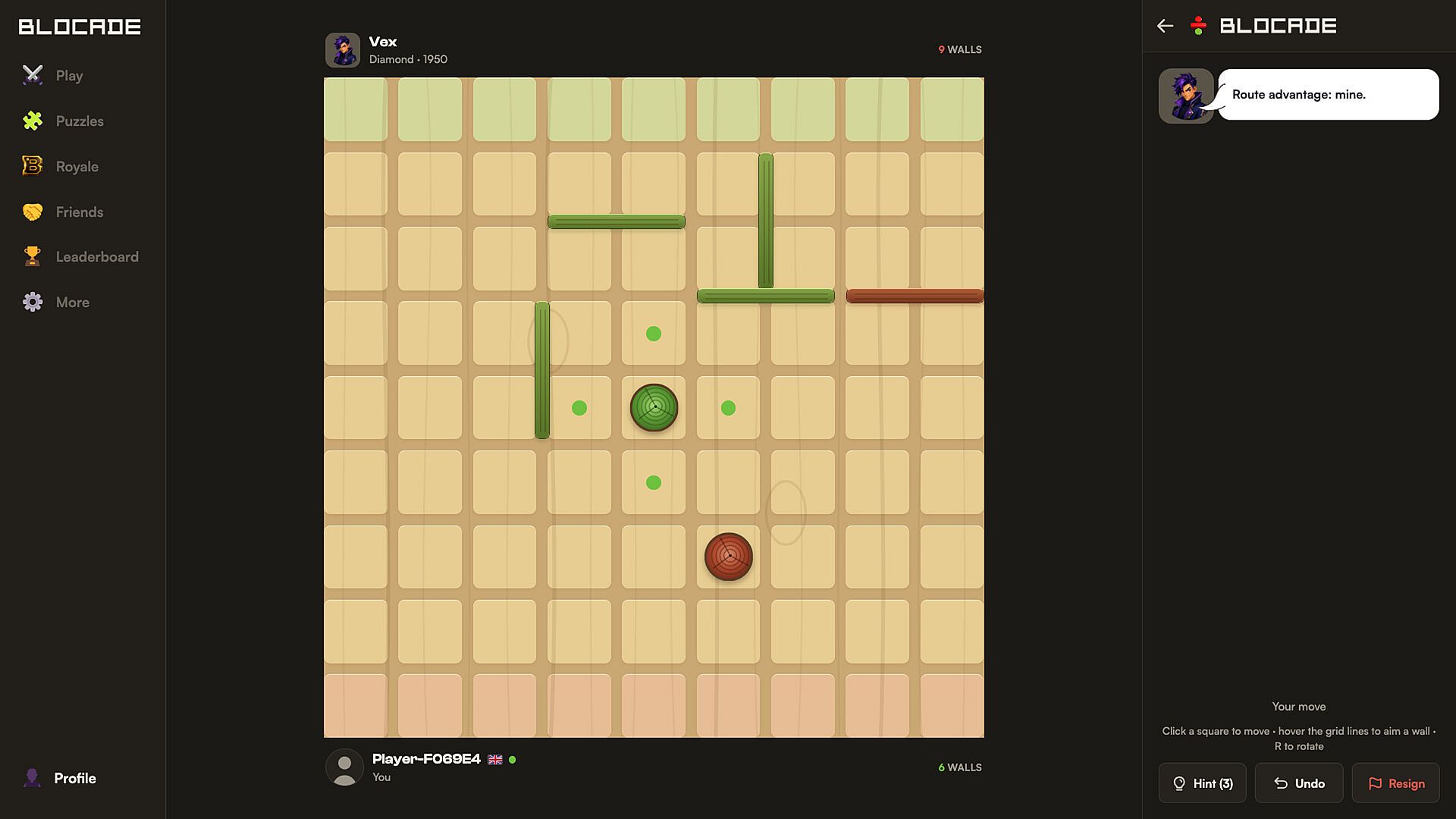
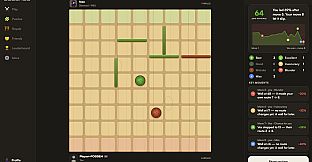
Blocade is a free-to-play strategy board game for PC that blends simple rules with deep tactical decisions. Players race a single pawn across a 9x9 grid while placing walls to redirect an opponent, with the first to reach the opposite side claiming victory. The core loop revolves around choosing between advancing your pawn one square or spending a turn to block paths, all while respecting the rule that a path must always remain open for both sides. This creates constant tension between racing forward and investing in defensive structures that force longer routes.
Gameplay
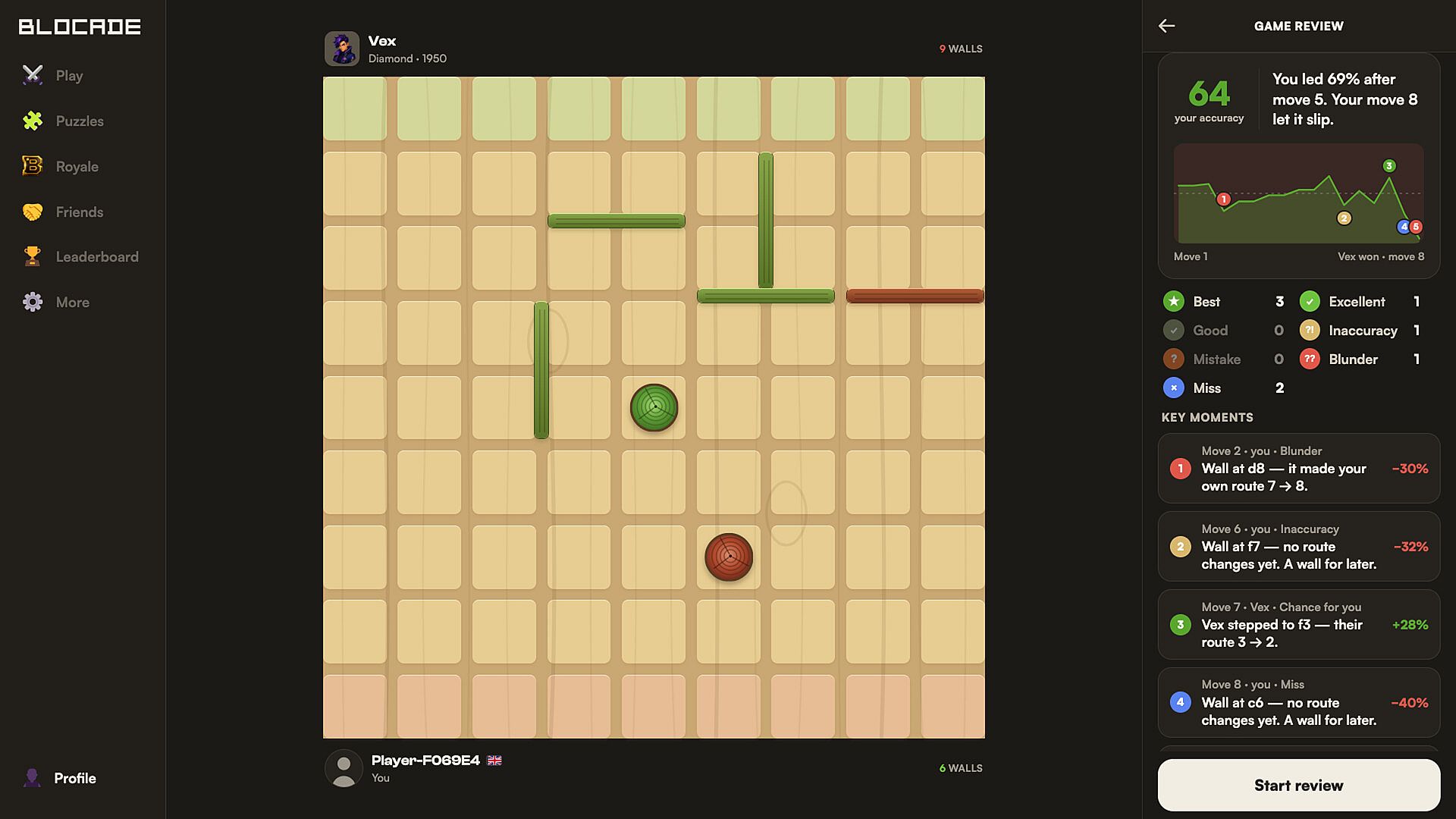
Each turn offers one action only: move the pawn in any cardinal direction to an adjacent empty square or position a wall segment on the grid lines. The board starts empty except for the two pawns placed opposite each other on their home rows. Walls cannot create a complete barrier, so every placement lengthens an opponent's journey without ever trapping them outright. Success depends on calculating shortest paths, timing wall investments against movement opportunities, and anticipating how the opponent will respond to the new geometry. The game supports cross-platform play, allowing PC users to match against mobile opponents in the same ranked pool for consistent matchmaking at any time of day.
Practice options include a ladder of computer opponents that scale in difficulty and style, from straightforward early challenges to more sophisticated late-game opponents. Daily puzzles drawn from real match positions provide focused tactical training, and post-game analysis tools highlight key turning points once unlocked. Time controls range from quick formats suited for short sessions to more relaxed settings that allow deeper calculation.
Game Modes
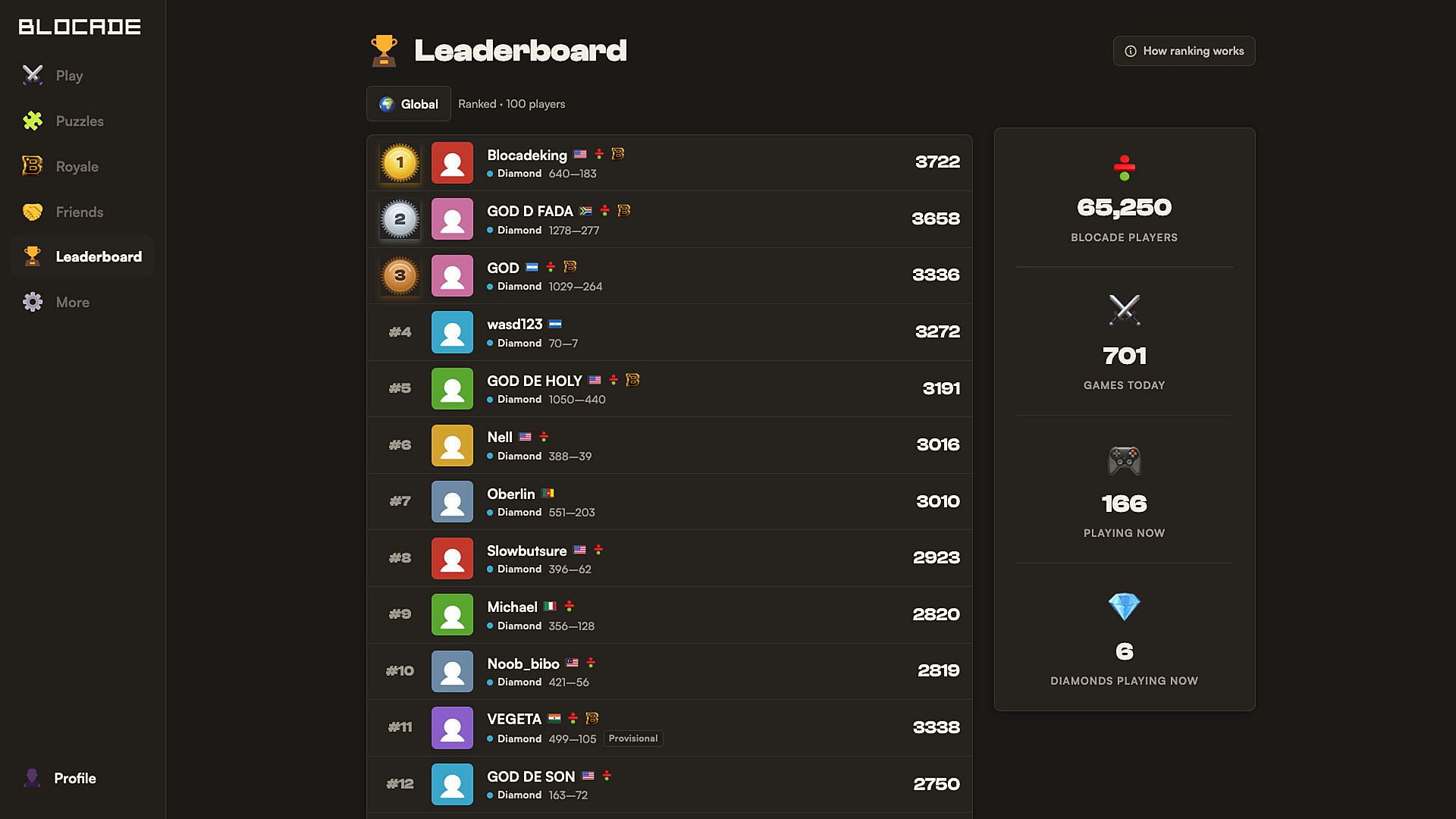
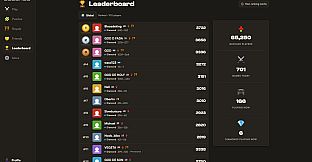
Ranked matches form the competitive backbone, pairing players in one-versus-one encounters that contribute to an overall rating and leaderboard position. These games run continuously across platforms, ensuring quick queues regardless of region or hour. Private matches let friends connect directly through shared codes for casual or arranged duels.
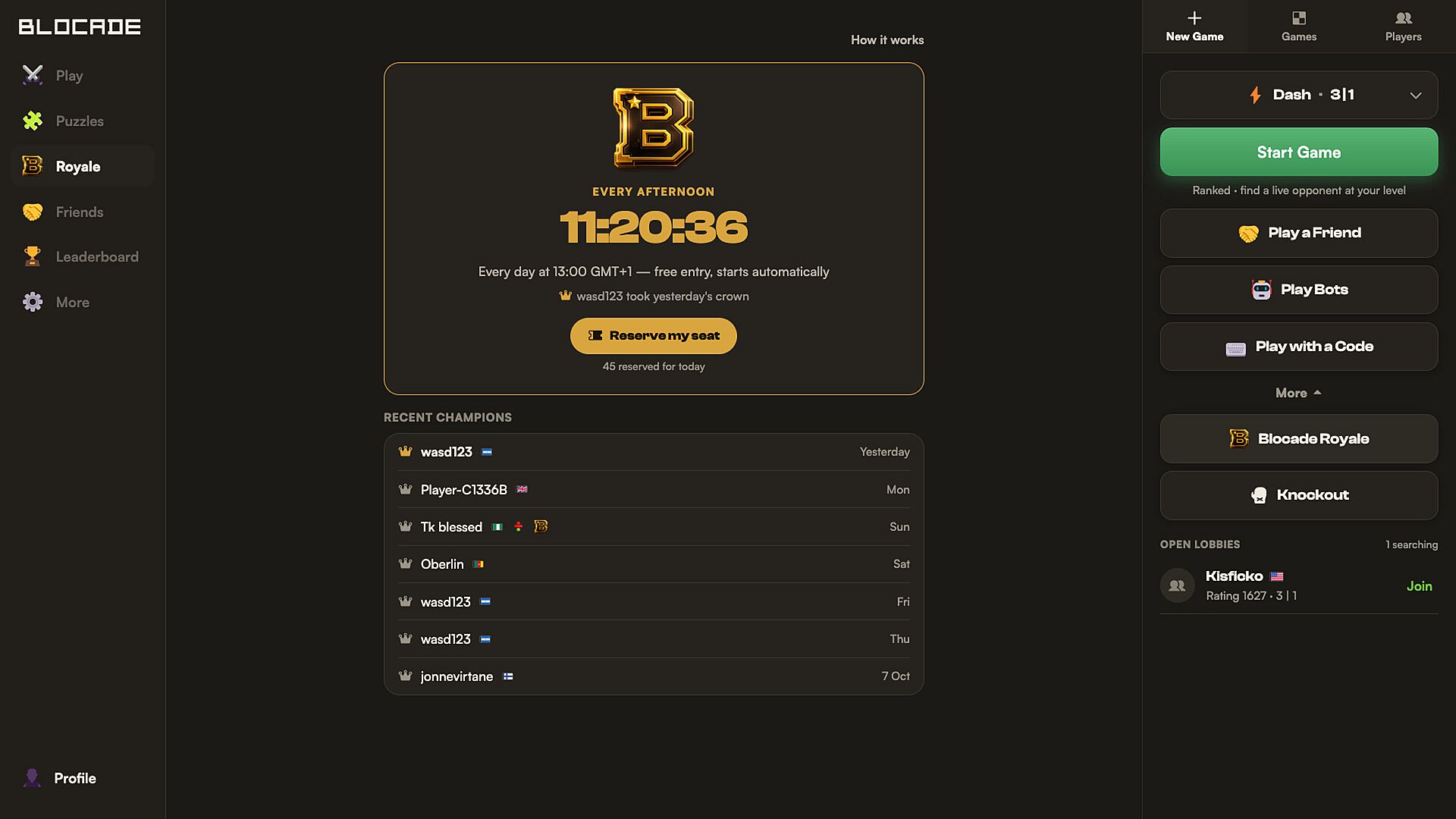
The daily Royale operates as a 128-player single-elimination tournament that begins at noon UTC. Participants advance through bracket rounds on individual boards until one player remains. Entry requires no payment, though a reserved spot becomes available through the optional Plus upgrade. Private Knockouts extend this format to groups of four to sixteen players, where the host manages the bracket and participants join freely.
Additional single-player content centers on bot matches across varying skill tiers and a rotating set of puzzles that reward consistent daily completion. Local pass-and-play supports two people sharing one device for head-to-head sessions without online requirements.
Progression and Customization
Players track progress through ratings, streaks on puzzles and bot ladders, and personal statistics that update after each ranked encounter. Board themes and communication options expand with the Plus purchase, which also grants unlimited ranked access, detailed match reviews, and enhanced assisted play features such as hints and move takebacks. The base experience remains fully functional without these additions, preserving the core strategy elements for all users.
Is It Worth Playing?
Blocade suits players who enjoy abstract strategy games that reward foresight and efficient resource management over luck or reflexes. Its free-to-play structure with optional one-time unlocks keeps barriers low while delivering consistent online competition and daily events. The cross-platform ranked system and tournament formats provide ongoing engagement for those seeking regular matches, while bot ladders and puzzles support skill development at any pace. Recent Steam release means the PC version is current, with the same rules and features already refined on mobile. Those drawn to Quoridor-style mechanics or chess-adjacent calculation will find the short game length and clear win conditions make repeated play rewarding without requiring long commitments. The absence of random elements keeps every outcome tied directly to decisions made on the board.